

Blog
Uppercase & Lowercase Letter Tracing Worksheets for Kids

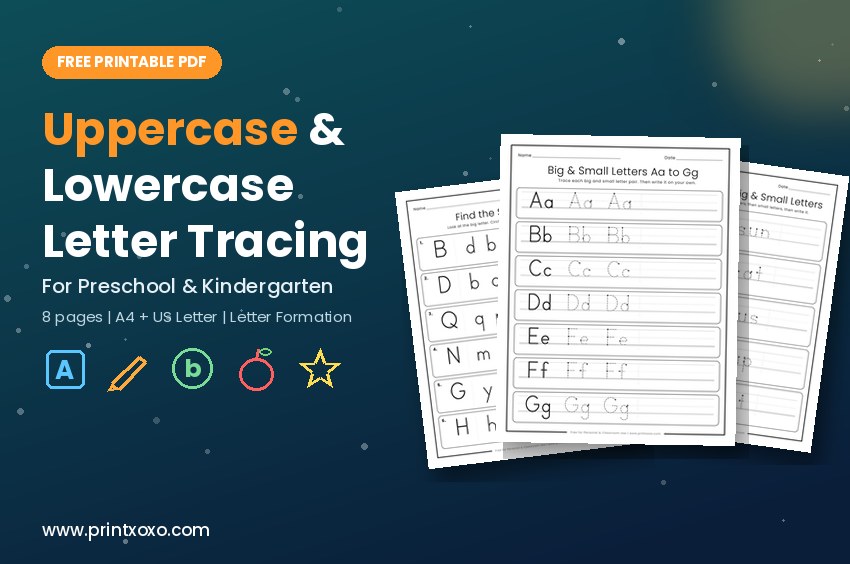
These uppercase and lowercase letter tracing worksheets put the big letter and its small partner side by side, so kids practice A and a together instead of learning them as two strangers. There are 8 free printable pages for ages 4 to 6, and every one comes as a PDF in US Letter (8.5 x 11 in) and A4.
Most kids can sing the ABC song long before they can tell you that g belongs to G. That pairing is the whole point here. Four pages cover the whole alphabet in pairs. The other four ask kids to use what they traced: sort small letters by height, spot the right partner, match big to small, and trace short words.
Free Uppercase and Lowercase Letter Tracing Worksheets to Print
Press Download or Print under a worksheet and choose your paper size. US Letter is for the US and Canada. A4 is for most other countries.
What’s on Each Page
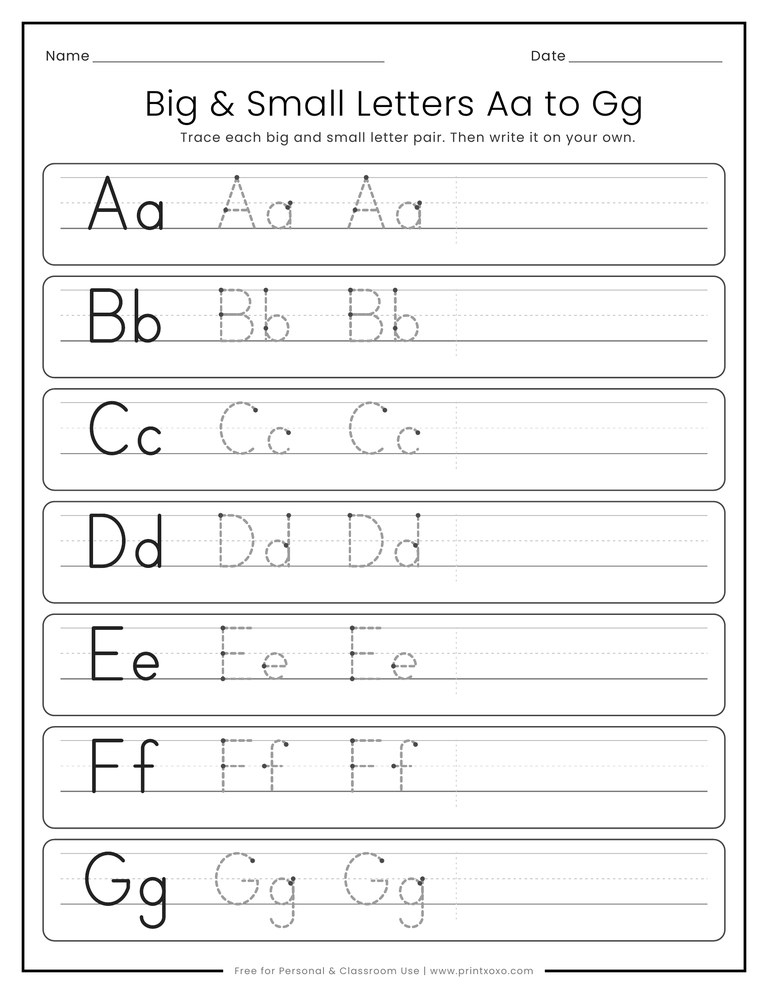
- Aa to Gg: seven rows. One dark model pair, two dashed pairs to trace, then open lines to write the pair alone.
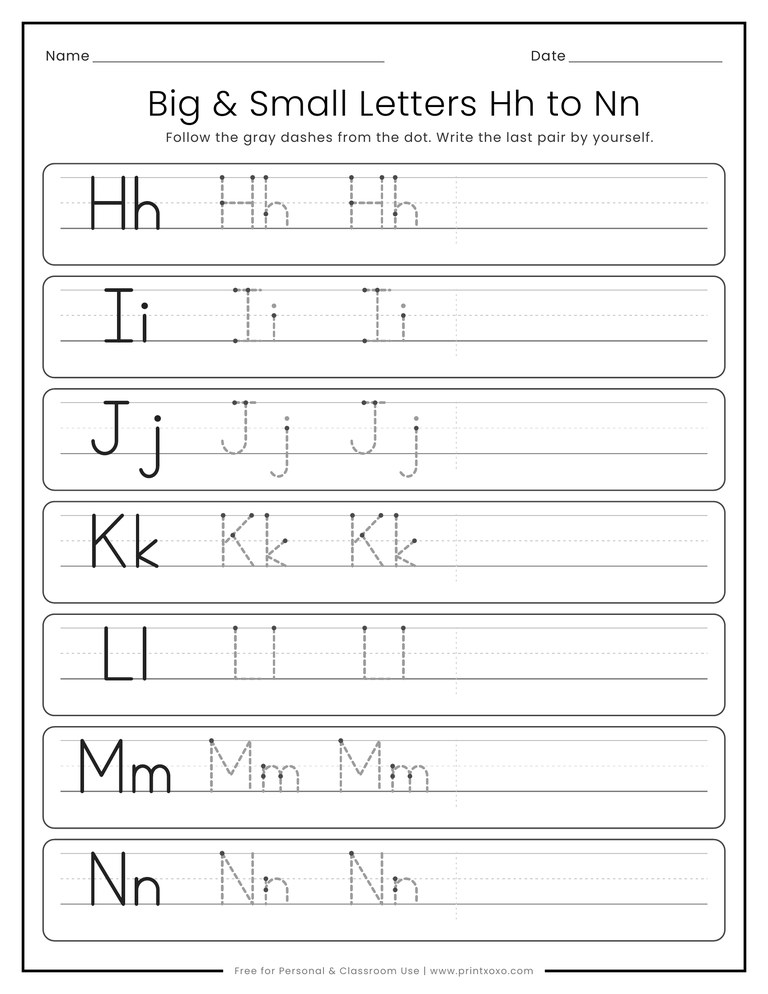
- Hh to Nn: same layout. Watch the dots on i and j, and the hump on lowercase m.
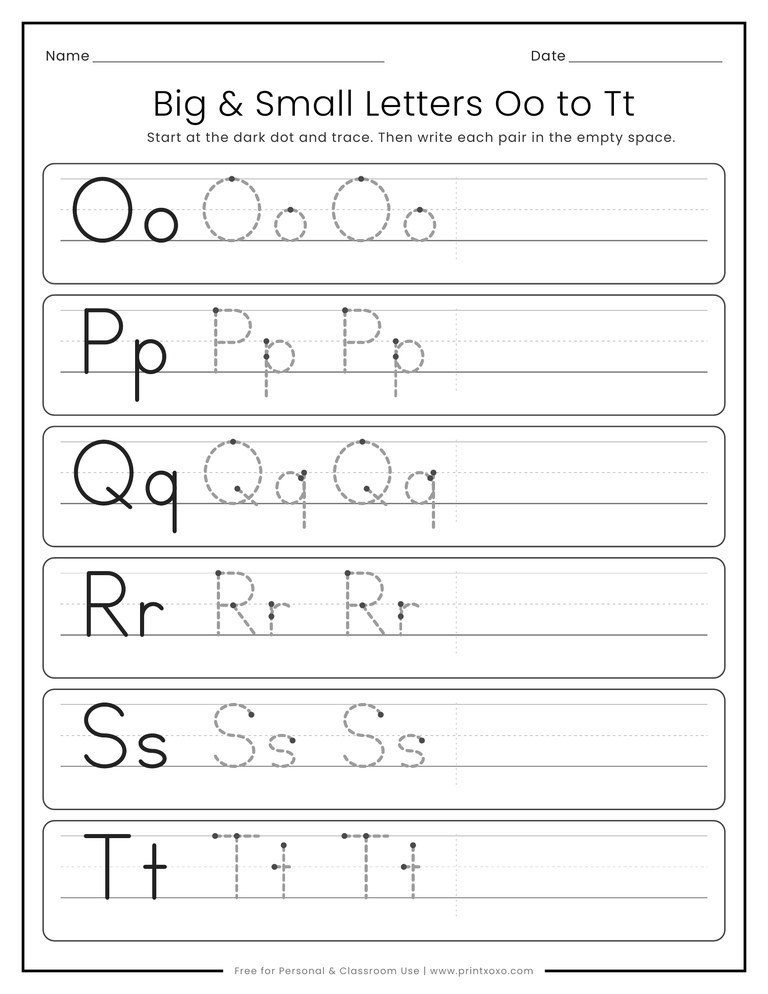
- Oo to Tt: six rows with lots of curves. The q gets a straight tail, not a hook.
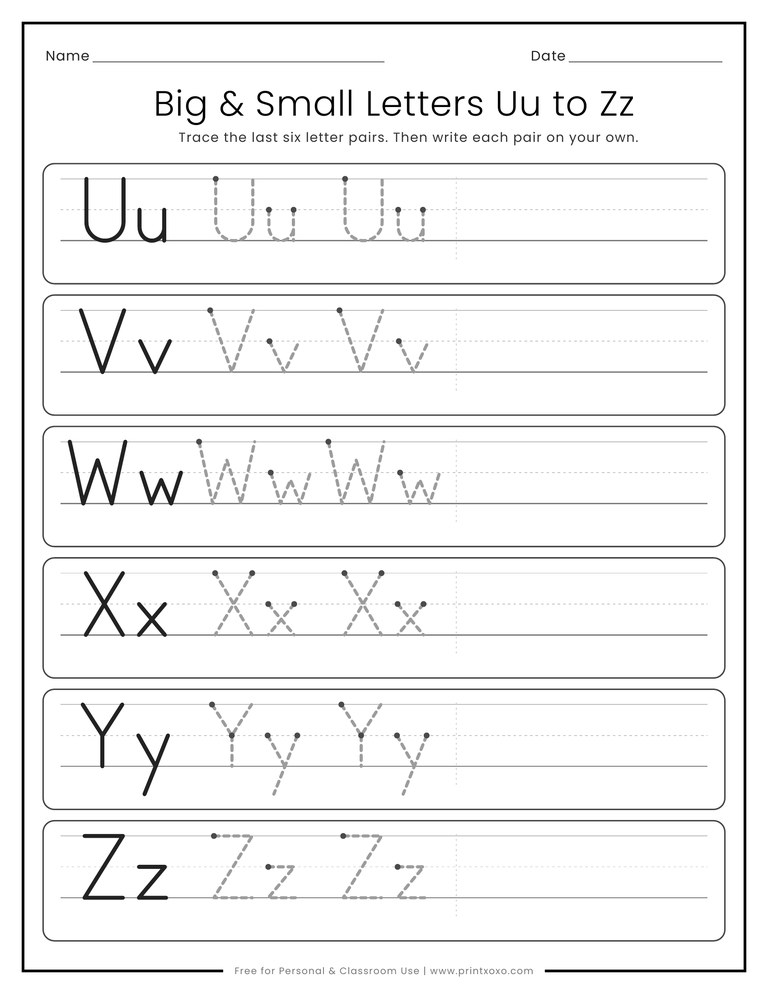
- Uu to Zz: six rows to finish the alphabet.
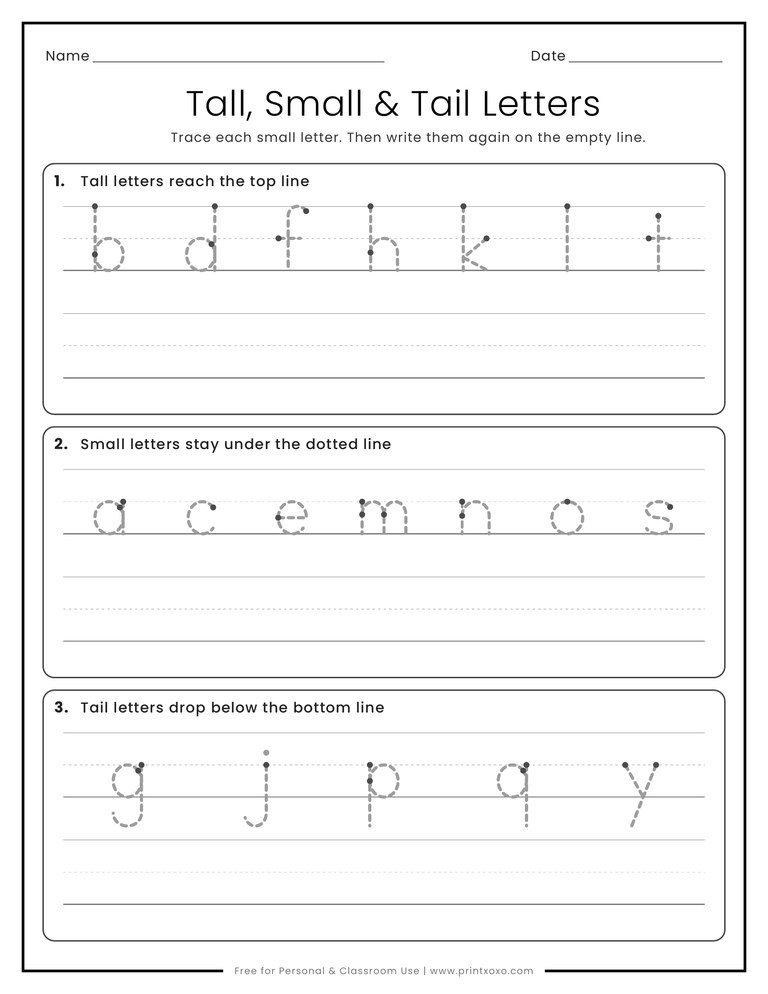
- Tall, Small and Tail Letters: b, d, f, h, k, l and t reach the top line. a, c, e, m, n, o and s stay small. g, j, p, q and y drop below.
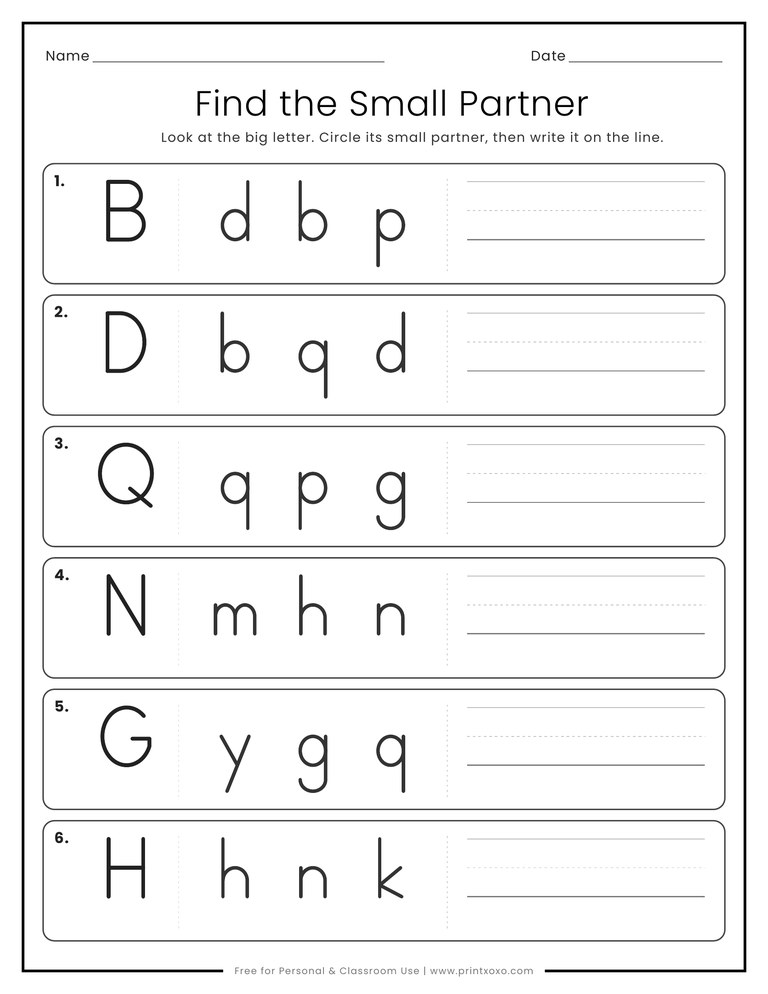
- Find the Small Partner: six big letters, three small choices each. Circle the partner, then write it.
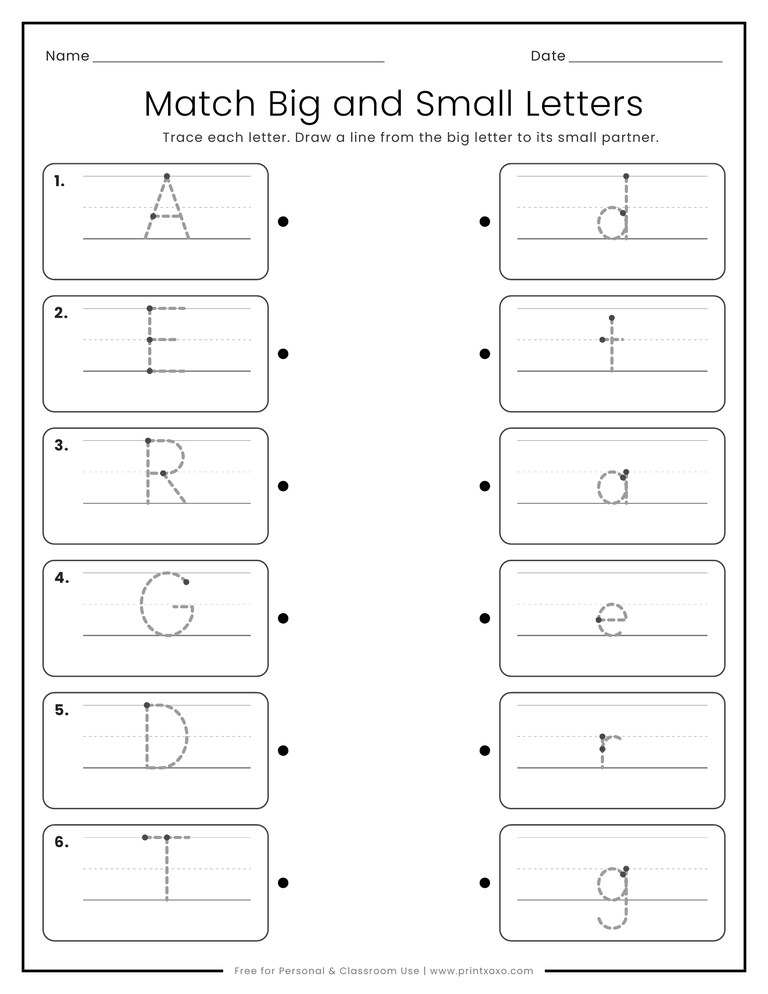
- Match Big and Small Letters: trace six capitals and six small letters, then draw lines to pair them.
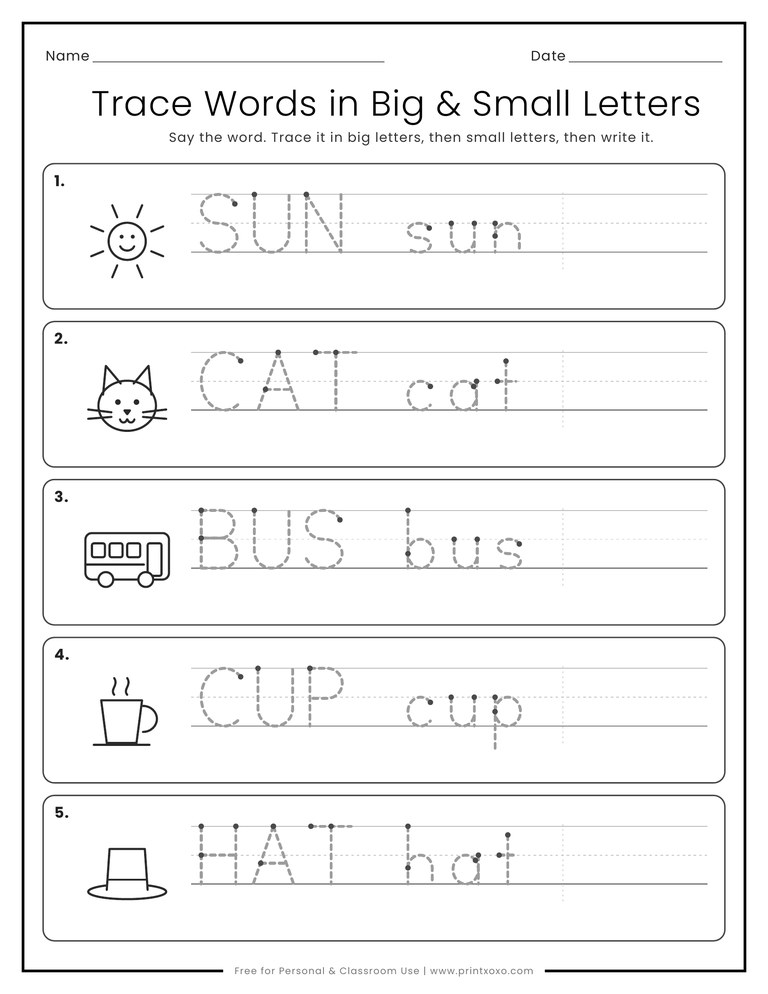
- Trace Words: five short words with a picture, traced once in capitals and once in small letters.
Why Practice Big and Small Letters Together
Books are mostly lowercase. Kids tend to learn capitals first because they’re made of straight lines and they’re on every sign. So a child who knows R can still freeze at r in a picture book. Uppercase and lowercase letter tracing worksheets keep the two side by side, so the link between them gets stronger every row.
The lines matter too. Our pages use a top line, a dotted middle line and a bottom line. Capitals always fill the space from top to bottom. Lowercase letters don’t, and that’s where kids get mixed up. A tall h and a short n look alike until you notice where they start. The tall, small and tail page spells that out in plain words a 5-year-old can follow.
Every letter is drawn as one dashed line with a dark dot where the pencil should start. No hollow outlines to color in. Kids trace the stroke they’ll actually write.
Tips From Using These at Home and in Class
- Print at 100% or “Actual size,” not “Fit to page,” so the writing lines stay the right height.
- Slide a page into a dry-erase sleeve for morning work or a writing center. One copy lasts the whole week.
- Black and white is all you need. The pages are light on ink.
- Do one alphabet page at a time. Seven letter pairs is plenty for most 4-year-olds.
- On the partner page, have your child say each letter out loud before circling. Saying “that’s a d, not a b” helps more than guessing.
- For the word page, point to the picture first and let them sound out the word before they trace it.
Frequently Asked Questions
What age are these worksheets for?
These uppercase and lowercase letter tracing worksheets suit most kids from 4 to 6: pre-K, kindergarten and early first grade. Still working on pencil grip? Start with simple lines first.
Are they really free?
Yes. They’re free for personal and classroom use. Please don’t sell them or upload the files somewhere else. If you want to share, send the link to this page.
Which paper size should I pick?
Pick US Letter if you’re in the US or Canada. Pick A4 almost everywhere else. Both PDFs look the same; only the page size changes.
Should my child learn uppercase or lowercase first?
Many families and teachers start with capitals because they’re easier to form, then add lowercase soon after. Teaching them together works too. If one form is brand new, slow down and skip the write-alone space for a day or two.