

Blog
Free Printable Wild Animals Worksheets for Preschool and Kindergarten

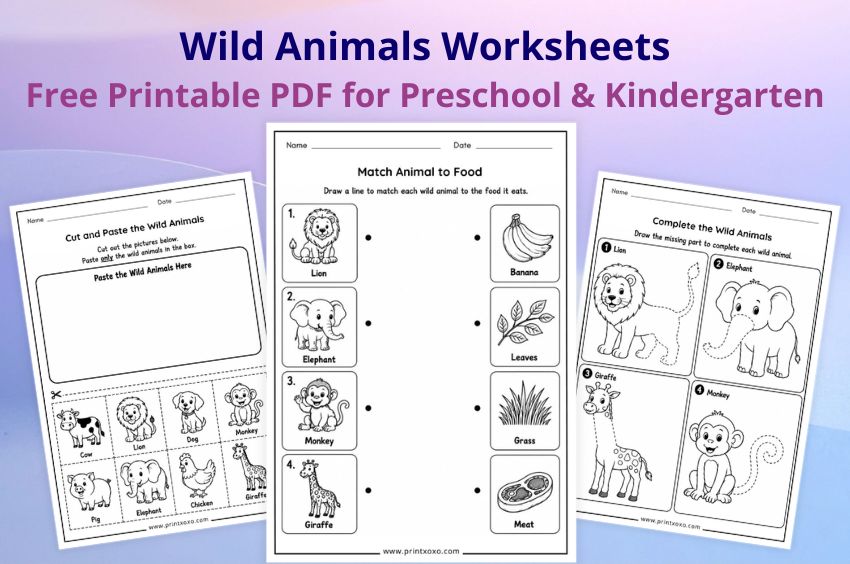
Wild animals have a special way of capturing a child’s imagination. Whether it’s a roaring lion, a playful monkey, or a towering giraffe, young learners are naturally curious about animals that live in forests, jungles, grasslands, and other natural habitats. That curiosity makes wild animals one of the best preschool science topics to introduce during the early years.
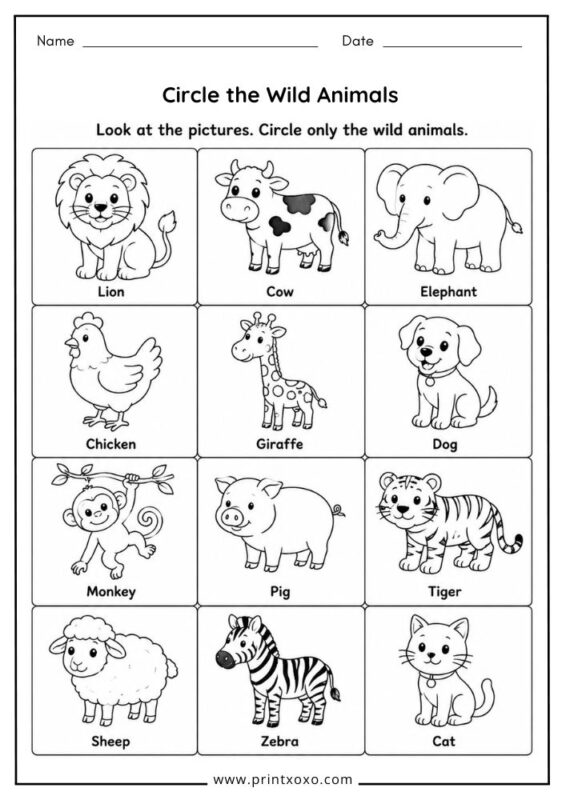
Circle only the wild animals and leave the others. This printable activity helps preschoolers learn animal identification in a fun way.
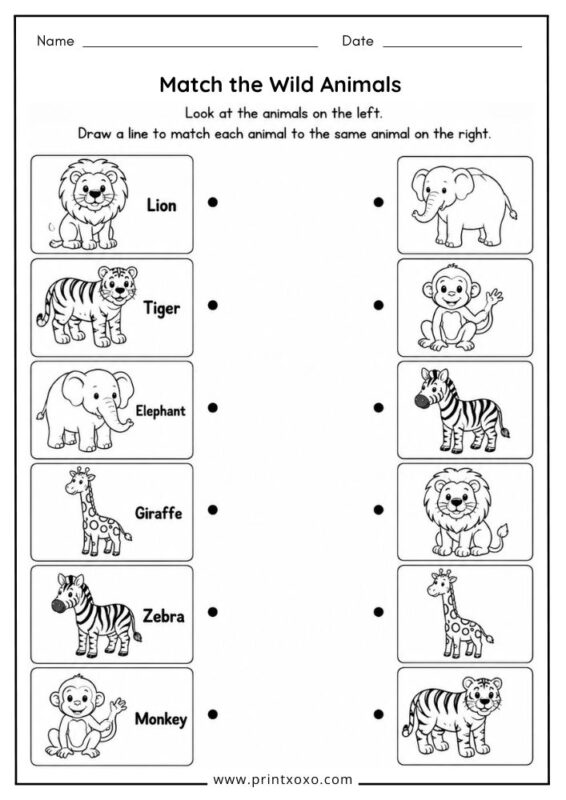
Draw lines to match each wild animal correctly. Great for improving observation and matching skills.
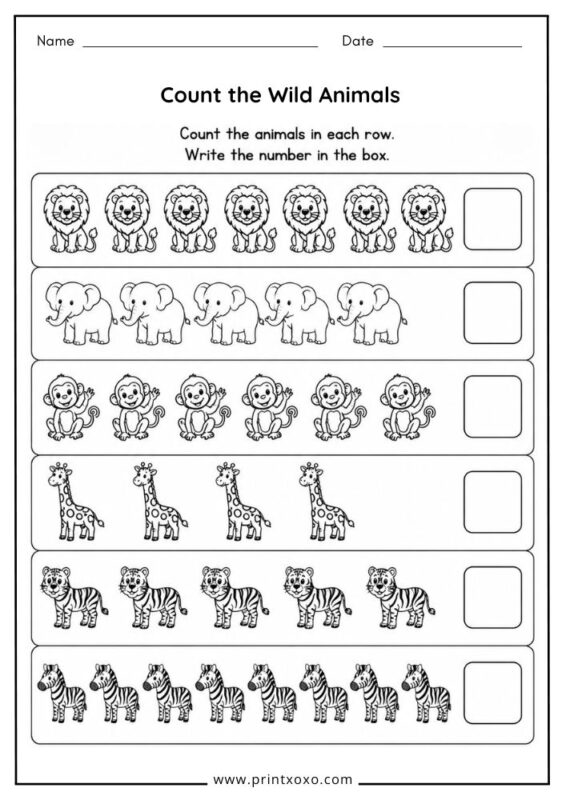
Count each group of wild animals carefully. Then write the correct number in the box.
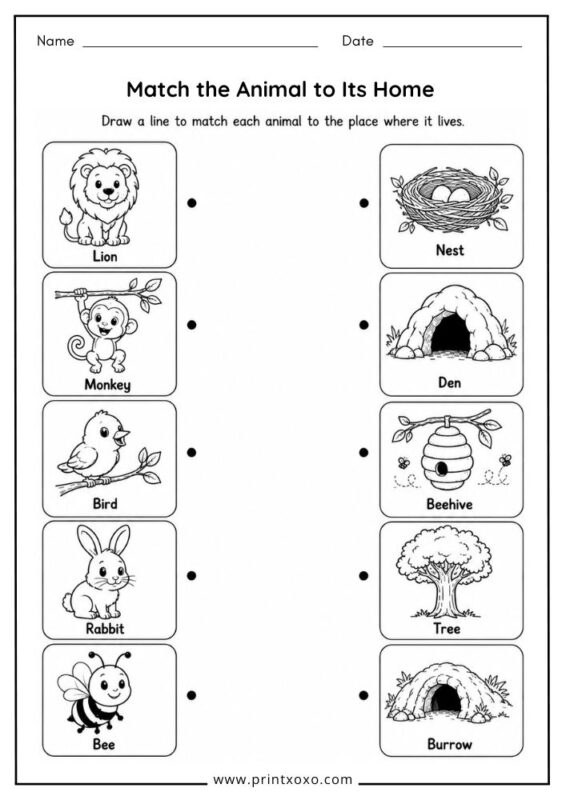
Match every wild animal to its correct home. A fun activity for learning about animal homes.
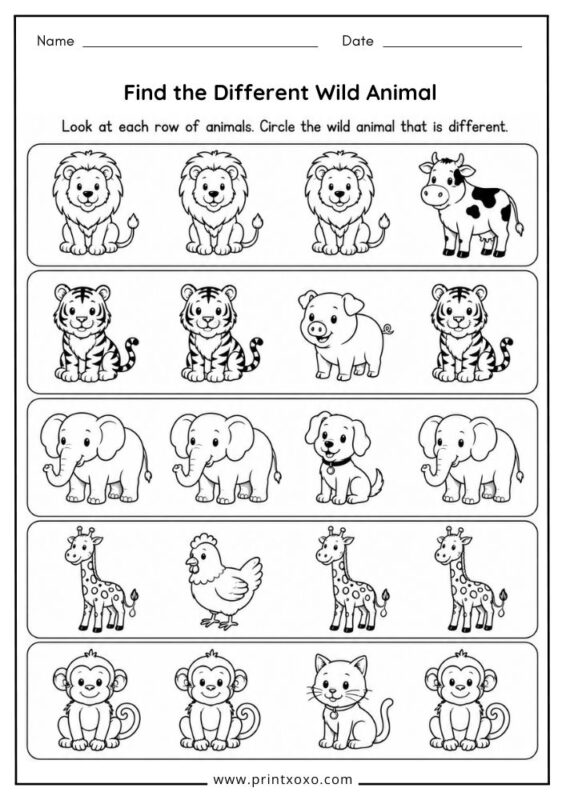
Look carefully at each row and find the different animal. This activity builds visual discrimination skills.
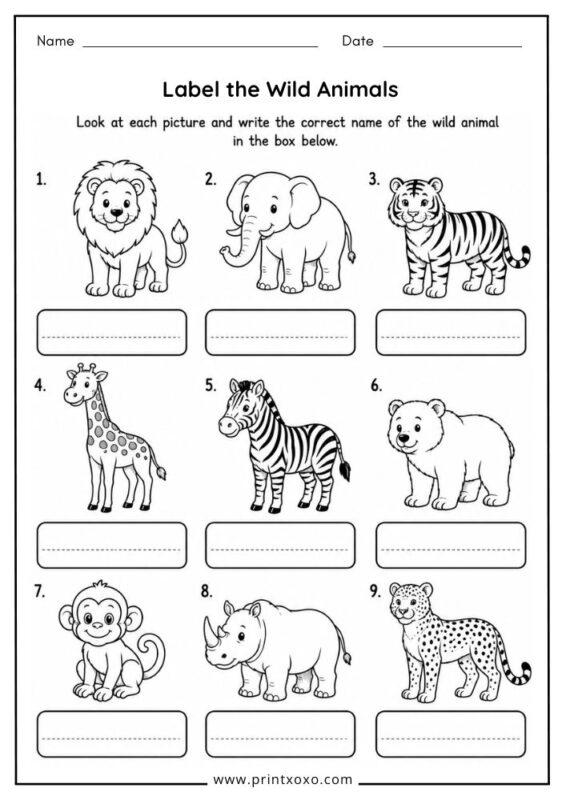
Look at each picture and write the correct animal name. A simple worksheet for building vocabulary.
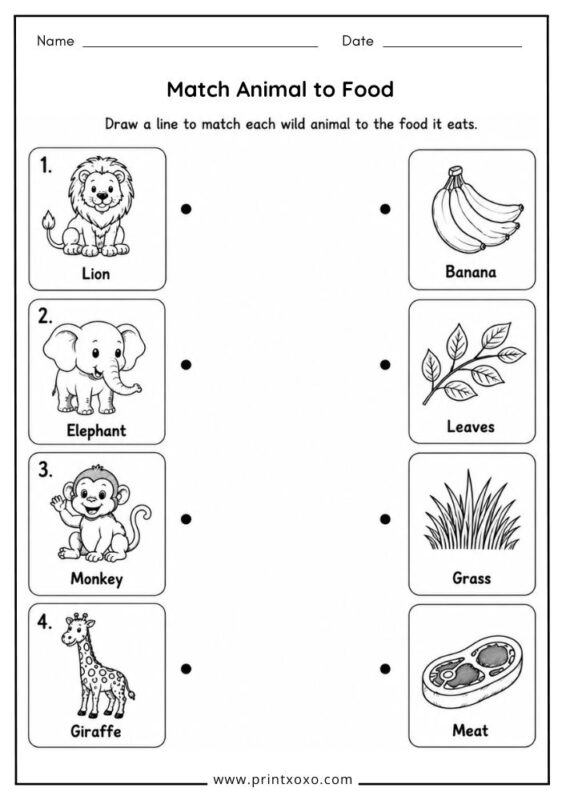
Match each wild animal with the food it eats. A fun way to learn about animal diets.
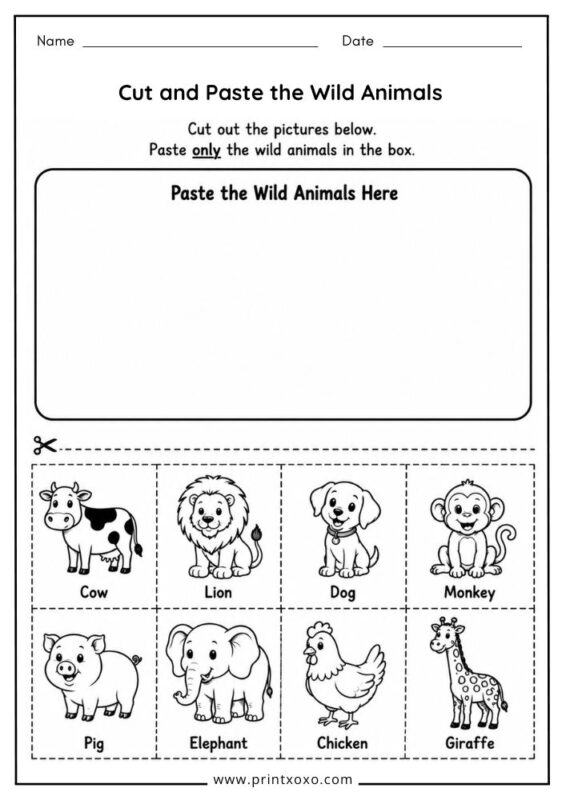
Cut out the pictures and paste only the wild animals. This activity builds fine motor and sorting skills.
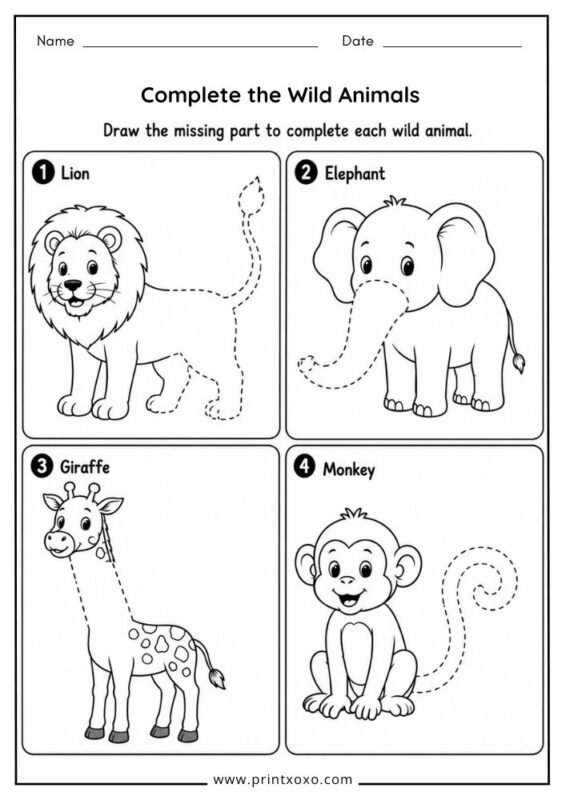
Complete each wild animal by drawing the missing part. A fun printable for creativity and pencil control.
Our Free Printable Wild Animals Worksheets are designed to turn that curiosity into meaningful learning. Instead of simply memorizing animal names, children practice identifying, matching, counting, drawing, and observing while developing important early learning skills. Every activity focuses on one clear objective, making it easy for preschoolers and kindergarteners to stay engaged without feeling overwhelmed.
These printable worksheets are perfect for parents, preschool teachers, homeschool families, daycare providers, and anyone looking for simple, hands-on learning activities. Just print the pages and children are ready to explore the exciting world of wild animals through fun educational exercises.
Whether you’re planning a classroom science lesson, adding to your homeschool curriculum, or simply looking for an enjoyable afternoon activity, this collection provides an easy way to combine learning with play.
Free Printable Wild Animals Worksheets
Below you’ll find nine printable worksheets designed for preschool and kindergarten children. Each activity helps build a different early learning skill while introducing familiar wild animals in a fun and age-appropriate way.
1. Circle the Wild Animals Worksheet
Some children can easily recognize a lion or an elephant, but they may still confuse wild animals with pets or farm animals. This worksheet helps reinforce that difference in a simple and engaging way.
Children look at several animal pictures and circle only the wild animals. As they complete the activity, they practice observation skills while learning which animals belong in nature.
This worksheet helps children practice:
- Animal recognition
- Visual discrimination
- Observation skills
- Early science concepts
2. Match the Wild Animal Worksheet
Matching activities encourage children to slow down, compare pictures carefully, and notice small details.
In this worksheet, children draw lines to connect each wild animal with its matching picture. Although the activity looks simple, it strengthens visual memory and improves pencil control at the same time.
This worksheet helps children practice:
- Matching skills
- Visual memory
- Pencil control
- Animal identification
3. Count the Wild Animals Worksheet
Counting becomes much more enjoyable when children use interesting pictures instead of plain numbers.
This worksheet asks children to count groups of wild animals and write the correct number. The activity reinforces one-to-one correspondence, an important early math skill that prepares children for future number work.
This worksheet helps children practice:
- Counting
- Number recognition
- One-to-one correspondence
- Observation
4. Match the Animal to Its Home Worksheet
Children often enjoy learning where different animals live. This worksheet introduces simple animal habitats by asking children to match each wild animal with its correct home.
For example, children connect a lion to its den, a monkey to a tree, a bird to its nest, a rabbit to its burrow, and a bee to its beehive.
Learning through matching makes these new ideas easier to remember.
This worksheet helps children practice:
- Animal habitats
- Science vocabulary
- Logical thinking
- Matching skills
5. Find the Different Wild Animal Worksheet
This activity encourages children to pay close attention to every picture before making a decision.
Each row contains three wild animals and one animal that does not belong. Children carefully examine the pictures and circle the different one.
Activities like this improve observation while helping children classify animals correctly.
This worksheet helps children practice:
- Visual discrimination
- Classification
- Critical thinking
- Observation skills
6. Label the Wild Animals Worksheet
Recognizing an animal is one skill. Remembering and writing its name is another important step.
This worksheet allows children to identify familiar wild animals and write or trace the correct names beneath each picture. Teachers and parents can also use the worksheet for spelling practice or vocabulary review.
This worksheet helps children practice:
- Vocabulary development
- Animal recognition
- Letter formation
- Early writing skills
7. Match Animal to Food Worksheet
Children naturally wonder what different animals eat. This worksheet introduces simple food relationships by asking children to match each wild animal with the food it typically eats.
The activity includes familiar examples such as matching a lion with meat, an elephant with grass, a monkey with bananas, and a giraffe with leaves.
These simple associations make science lessons more meaningful for young learners.
This worksheet helps children practice:
- Animal diets
- Science concepts
- Matching skills
- Logical thinking
8. Cut and Paste the Wild Animals Worksheet
Cut-and-paste activities combine learning with creativity while strengthening fine motor development.
Children cut out the animal pictures and paste only the wild animals inside the activity box. As they work, they learn to separate wild animals from domestic animals while practicing careful cutting and gluing.
This activity is especially popular in preschool classrooms because it keeps children actively involved.
This worksheet helps children practice:
- Fine motor skills
- Scissor skills
- Sorting
- Animal classification
9. Complete the Wild Animal Worksheet
Drawing activities encourage children to observe carefully before putting pencil to paper.
In this worksheet, each wild animal has a large missing section. Children complete the picture by drawing the missing parts.
Unlike simple coloring pages, this activity encourages creativity while strengthening visual perception and hand control.
This worksheet helps children practice:
- Drawing skills
- Observation
- Fine motor control
- Creative thinking
Why Learning About Wild Animals Is Important
Teaching children about wild animals is about much more than helping them recognize a lion or an elephant. During the preschool and kindergarten years, children are naturally curious about the world around them. Animals often become one of their first introductions to science because they are interesting, easy to observe, and exciting to talk about. As children learn about different wild animals, they also begin to understand that every living thing has its own habitat, food, and way of surviving. These simple ideas create a strong foundation for future science lessons while encouraging children to ask questions, explore, and think critically. Wild animal activities also help children understand that not every animal lives with people. They begin to recognize the difference between pets, farm animals, and animals that belong in the wild. These early lessons make it easier for children to understand nature and develop respect for wildlife.
What Are Wild Animals?
Wild animals are animals that live in their natural environments without depending on people for food or shelter. They survive by finding their own food, protecting themselves, and raising their young in nature. Unlike pets or farm animals, wild animals are not raised by humans. They may live in forests, jungles, grasslands, mountains, deserts, rivers, or wetlands depending on their species. Some of the wild animals preschoolers commonly recognize include:
- Lion
- Tiger
- Elephant
- Giraffe
- Zebra
- Monkey
- Bear
- Rhinoceros
- Hippopotamus
- Crocodile
At this age, children do not need detailed scientific explanations. A simple understanding that wild animals live in nature and care for themselves is enough to build a strong learning foundation.
Skills Children Develop with Wild Animals Worksheets
Although these printable worksheets focus on animals, they support many different areas of early childhood development.
Observation Skills
Many activities ask children to compare pictures carefully before choosing an answer. Looking closely at shapes, sizes, and details strengthens observation, which is an important skill for reading, science, and problem-solving later in school.
Visual Discrimination
Activities like matching, circling, and finding the different animal help children notice similarities and differences between pictures. This skill also supports letter recognition and early reading.
Fine Motor Development
Holding pencils, drawing lines, cutting, coloring, and completing pictures strengthen the small muscles in children’s hands and fingers. Fine motor development prepares children for writing letters, numbers, and sentences with better control.
Vocabulary Growth
Every new animal introduces another opportunity for conversation. Children learn new words such as:
- Habitat
- Jungle
- Forest
- Grassland
- Den
- Nest
- Burrow
- Beehive
Talking about animals during each activity naturally builds language skills.
Early Math Skills
Counting worksheets allow children to practice one-to-one correspondence while improving number recognition. Instead of counting plain dots, children count exciting animal pictures, making math feel more enjoyable.
Science Readiness
Children begin exploring simple science concepts, including:
- Animal habitats
- Animal diets
- Classification
- Living things
- Nature
These early experiences make future science lessons much easier to understand.
How Parents Can Use These Worksheets at Home
Parents do not need a formal lesson plan to make these worksheets effective. Choose one worksheet each day rather than completing the entire collection at once. Young children usually stay focused longer when activities are short and enjoyable. While your child works, ask simple questions such as:
- Which animal is your favorite?
- Where do you think this animal lives?
- Have you ever seen this animal at the zoo?
- What do you think it eats?
- Is it bigger or smaller than a dog?
These conversations help children think beyond the worksheet while improving speaking and listening skills.
Classroom Ideas for Teachers
These worksheets fit easily into preschool and kindergarten lesson plans. Teachers can use them during:
- Morning work
- Science centers
- Independent practice
- Small-group instruction
- Early finisher activities
- Homework folders
- Learning stations
For an engaging classroom lesson, begin by reading a picture book about wild animals. Discuss the animals together, then let children complete one worksheet related to the lesson. This simple routine connects reading, discussion, and hands-on learning in a meaningful way.
Homeschool Learning Ideas
Homeschool families often enjoy combining different learning activities into one lesson. For example, after learning about elephants, children might:
- Read a nonfiction picture book.
- Watch a short educational video.
- Complete the Match Animal to Food Worksheet.
- Draw their own elephant.
- Visit a local zoo if possible.
Using different learning methods helps children remember new information more easily while keeping lessons interesting.
Make Learning Even More Fun
Printable worksheets work even better when they are paired with hands-on activities. Here are a few simple ideas:
- Pretend to walk like different wild animals.
- Listen to animal sounds and guess the animal.
- Build a jungle using toy animals.
- Sort toy animals into wild and domestic groups.
- Read bedtime stories featuring wild animals.
- Visit a zoo or wildlife park.
- Watch age-appropriate wildlife documentaries together.
These activities reinforce what children learn on the worksheets while making the experience more enjoyable.
Why Printable Worksheets Support Early Learning
Children learn best when they are actively involved in the learning process. That’s one of the reasons printable worksheets continue to be a valuable resource in both classrooms and homes. Instead of simply watching a video or listening to someone explain a concept, children interact with each activity by thinking, observing, drawing, counting, matching, and solving simple problems. Printable worksheets also encourage children to work at their own pace. Some children finish quickly, while others enjoy taking more time to carefully complete each activity. There is no pressure, making learning feel positive and enjoyable. Another advantage is that printed activities create opportunities for meaningful conversations. Parents and teachers can ask questions, introduce new vocabulary, and encourage children to explain their answers. These discussions often become just as valuable as the worksheet itself. For young learners, combining visual learning with hands-on practice creates stronger learning experiences that are easier to remember.
Tips for Getting the Most Out of These Worksheets
These activities are designed to be simple, but a few small strategies can make them even more effective.
Focus on One Worksheet at a Time
Children don’t need to complete every worksheet in one sitting. One activity each day helps maintain interest and prevents learning from becoming overwhelming.
Encourage Conversation
Instead of only checking whether an answer is correct, ask questions that encourage children to think. For example:
- Why do you think the lion is a wild animal?
- Which animal would you like to see at the zoo?
- Which animal is the biggest?
- Can you name another wild animal?
Simple conversations build confidence while strengthening vocabulary and communication skills.
Let Children Make Mistakes
Preschool is a time for exploring and learning. If a child matches the wrong picture or counts incorrectly, use it as an opportunity to guide them instead of immediately correcting every mistake. Encouraging children to think through their answers helps develop problem-solving skills and confidence.
Combine Worksheets with Real Experiences
Worksheets become even more meaningful when children can connect them with real life. You might:
- Visit a local zoo.
- Read books about wild animals.
- Watch age-appropriate wildlife videos.
- Play with animal figurines.
- Listen to animal sounds together.
These experiences help children remember what they have learned long after the worksheet is finished.
Frequently Asked Questions
What age are these wild animal worksheets designed for?
These worksheets are ideal for preschool and kindergarten children, generally between 3 and 6 years old. Most activities are simple enough for beginners while still providing meaningful practice for older preschoolers.
Are these worksheets free to print?
Yes. Every worksheet in this collection is designed to be printed and used for educational purposes at home or in the classroom.
Do children need to know how to read?
No. Most activities rely on pictures rather than reading, making them suitable for young learners who are still developing early literacy skills.
Can these worksheets be used in classrooms?
Absolutely. Many preschool teachers, kindergarten teachers, daycare providers, and homeschool families use printable worksheets as part of their daily lessons, learning centers, homework, or independent practice.
Which worksheet should children complete first?
There is no strict order, but many families like to begin with Circle the Wild Animals or Match the Wild Animal because these activities introduce the topic in a simple and engaging way before moving on to counting, matching habitats, or labeling.
Do these worksheets support early science learning?
Yes. While the activities are designed for young children, they introduce important science concepts such as wild animals, habitats, animal diets, observation, and classification in an age-appropriate way.
Final Thoughts
Learning about wild animals is one of the easiest ways to introduce young children to the natural world. Every new animal encourages curiosity, questions, and conversations that help children build knowledge while having fun. This collection of Free Printable Wild Animals Worksheets gives children the opportunity to practice much more than animal recognition. They also strengthen counting skills, vocabulary, observation, fine motor control, matching, classification, and early problem-solving through engaging, hands-on activities. Whether you’re a parent looking for a meaningful afternoon activity, a teacher planning a science lesson, or a homeschool family adding to your curriculum, these printable worksheets provide an enjoyable way to combine learning with play. Print your favorite worksheets, grab a pencil, and let your little learners discover the amazing world of wild animals—one activity at a time.
About These Worksheets
All worksheets on PrintXoxo are thoughtfully created for preschool and kindergarten learners. Every activity is designed to focus on one age-appropriate learning objective while supporting early childhood development through hands-on practice. Our goal is to provide parents and educators with simple, engaging, and classroom-friendly printables that make learning enjoyable for young children.