

Blog
Number Recognition Activities for Preschoolers (Fun Ways to Learn Numbers)

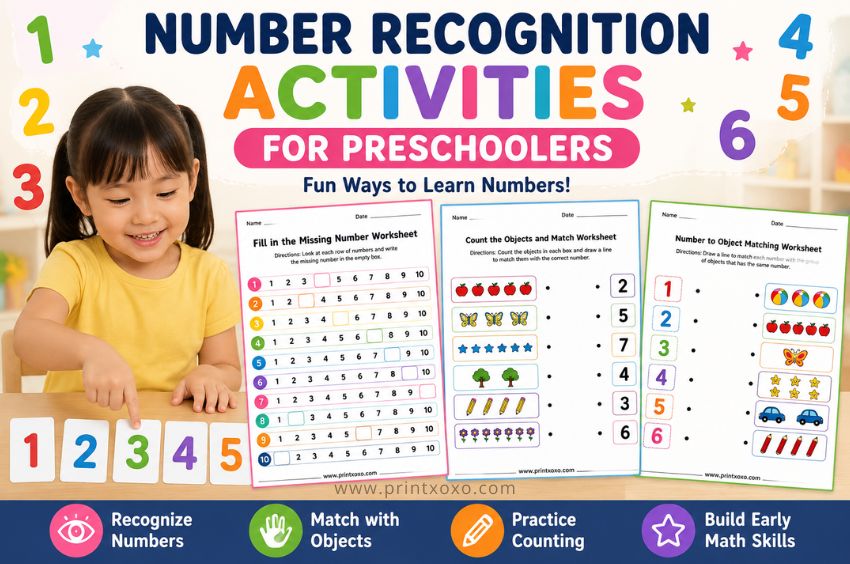
Most parents feel excited when their child starts recognizing numbers.
The first time a child points at a number and says it correctly feels like a big milestone. It might be a number on a toy, a cereal box, a calendar, or even a house number during a walk.
But learning numbers isn’t always as simple as it seems.
Many preschoolers can count from 1 to 10 without much trouble. Then someone points to the number 6 and asks what it is. Suddenly the answer becomes 8, 9, or sometimes a complete guess.
That’s because counting numbers and recognizing numbers are two different skills.
A child may know the number sequence perfectly while still struggling to identify individual numbers on a page.
The good news is that number recognition can be practiced through simple activities that feel more like play than learning.
What Is Number Recognition?
Number recognition is the ability to identify and name numbers when children see them.
For example, if you show a child the number 4 and they can correctly say “four,” that’s number recognition.
This skill becomes important because it supports almost every early math activity.
Children need number recognition before they can confidently work on:
- Counting activities
- Number matching
- Number writing
- Missing number exercises
- Simple addition and subtraction
Without number recognition, math becomes much harder later on.
Why Some Preschoolers Struggle With Number Recognition
Parents often assume their child will automatically recognize numbers once they learn counting.
Sometimes that happens.
Sometimes it doesn’t.
Many preschoolers memorize the counting sequence before they learn what individual numbers actually look like.
Think about the alphabet song.
A child may sing the entire song but still struggle to identify specific letters.
Numbers work in a very similar way.
Children need repeated exposure before number symbols become familiar.
This is completely normal.
Start With Numbers Children See Every Day
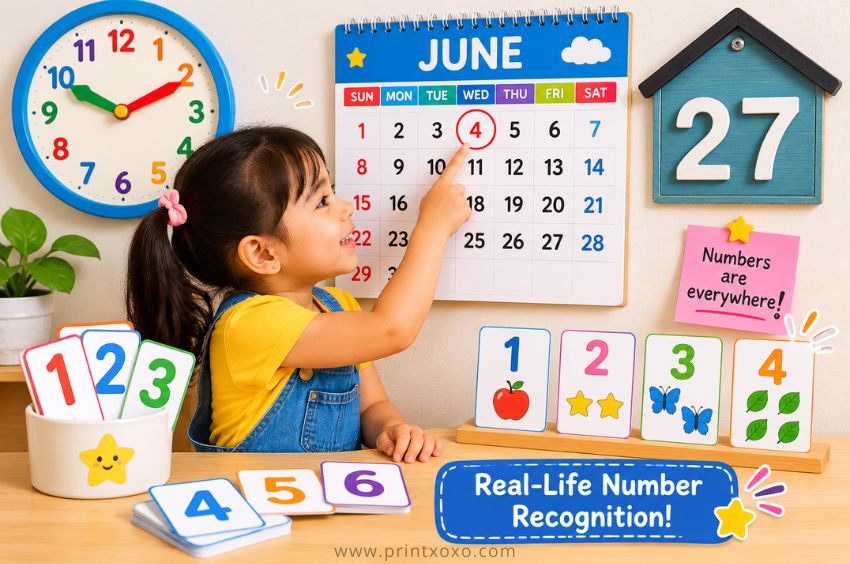
One of the easiest ways to teach number recognition is by using numbers that already exist in a child’s environment.
Children notice things better when learning happens naturally.
Look for numbers on:
- Calendars
- Clocks
- House numbers
- Remote controls
- Elevators
- Books
- Toy packaging
- Price tags
Instead of turning it into a lesson, simply ask:
“Can you find the number 3?”
“Do you see a number 5 anywhere?”
These small interactions add up over time.
Use Number Hunt Games
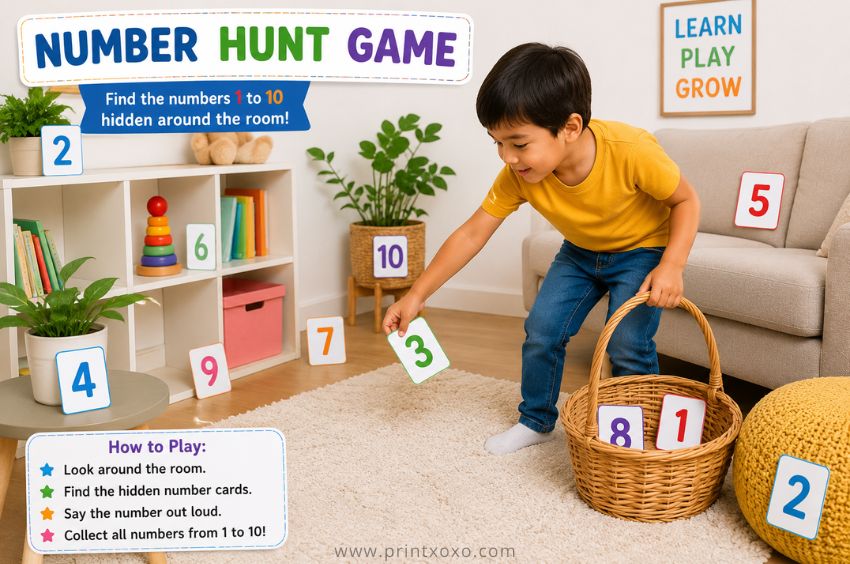
Young children love searching for things.
That’s why number hunts work so well.
Write numbers from 1 to 10 on small cards.
Hide them around a room.
Now ask your child to find specific numbers.
You can also try:
- Number scavenger hunts
- Outdoor number searches
- Number matching games
- Number sorting activities
The more children interact with numbers, the easier recognition becomes.
Make Learning Hands-On
Preschoolers learn best when they can touch, move, and interact with objects.
Instead of only showing flashcards, let children build numbers using real materials.
Try:
- Building numbers with blocks
- Forming numbers with play dough
- Drawing numbers in sand
- Making numbers with craft sticks
- Tracing large numbers with fingers
Activities like these help children remember number shapes more easily.
Focus on One Number at a Time
A common mistake is introducing too many numbers at once.
Children don’t need to learn all ten numbers in a single day.
Start small.
Introduce:
- 1
- 2
- 3
first.
Once those become familiar, move on to additional numbers.
This slower approach often produces better results than rushing through the entire number set.
Use Counting and Number Recognition Together
Counting and recognition work best when practiced together.
For example:
Place five toy cars on a table.
Count them together.
Then show the number 5.
Now children can connect the quantity with the number symbol.
This simple connection helps learning stick.
Many printable activities use this exact approach because it works so well.
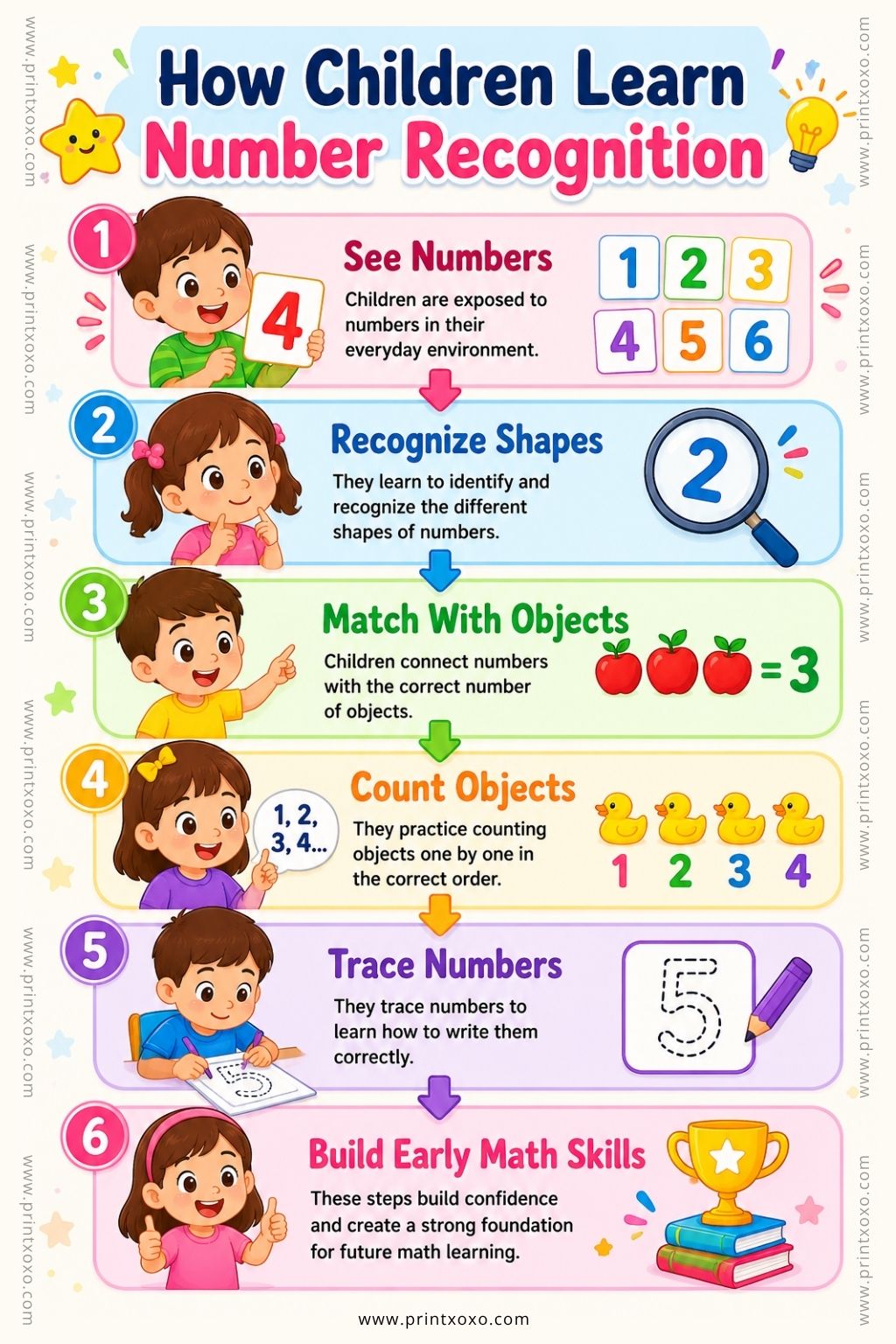
How Children Learn Number Recognition Infographic
When Worksheets Become Helpful
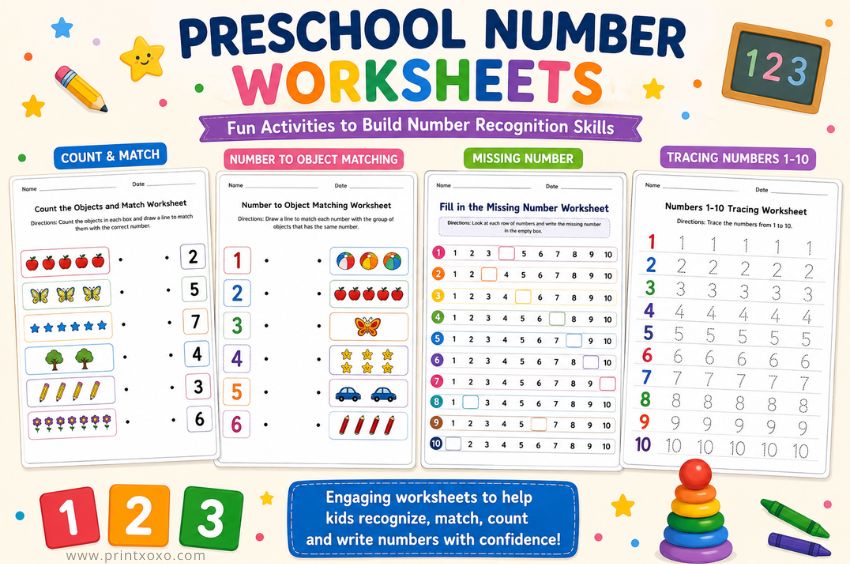
Once children begin recognizing basic numbers, worksheets can provide extra practice.
The key is choosing activities that encourage children to think rather than simply memorize.
For example, our Count and Circle Worksheets help children connect quantities with written numbers.
These activities encourage children to count objects before selecting an answer.
Some children need additional practice connecting number symbols with groups of objects.
In those situations, Number Matching Worksheets can be especially useful.
Matching activities often help number recognition improve faster because children repeatedly connect numbers with quantities.
Common Number Recognition Mistakes Parents Make
Most children don’t struggle because numbers are too difficult.
They struggle because the learning process gets rushed.
A few common mistakes can make number recognition harder than it needs to be.
Teaching Too Many Numbers at Once
Parents often introduce all numbers from 1 to 10 immediately.
That sounds productive, but it can overwhelm some children.
It’s usually better to focus on a few numbers at a time.
When children become comfortable recognizing those numbers, adding new ones becomes much easier.
Turning Practice Into a Test
Children learn better when activities feel fun.
If every question sounds like an exam, many preschoolers lose interest quickly.
Instead of asking:
“What number is this?”
all day long, try making it playful.
“Can you find a number 4 before I do?”
That small change can make a big difference.
Only Using Worksheets
Worksheets are useful.
But they work best when combined with hands-on activities.
Children need opportunities to see, touch, build, and interact with numbers in different ways.
The more experiences they have with numbers, the stronger recognition becomes.
What If Your Child Confuses Numbers?
This is extremely common.
Many preschoolers mix up:
- 6 and 9
- 2 and 5
- 1 and 7
- 3 and 8
Don’t panic.
Most children go through this stage.
Number recognition develops through repetition.
The more children see numbers in different situations, the easier it becomes to tell them apart.
One simple trick is to focus on the unique shape of each number.
Instead of saying:
“That’s wrong.”
Try saying:
“Let’s look carefully at the shape.”
This encourages observation instead of guessing.
Why Missing Number Activities Help
Once children start recognizing numbers, the next step is understanding how those numbers fit together.
That’s where missing number activities become useful.
For example:
1, 2, __, 4, 5
Children must recognize the numbers they already know and identify the missing one.
This helps strengthen both number recognition and number sequence skills.
Our Missing Number Worksheets are designed for this type of practice:
Many children enjoy these activities because they feel more like puzzles than traditional math exercises.
Don’t Forget About Number Writing
Recognizing numbers and writing numbers are different skills.
A child may instantly recognize the number 7 but still struggle to write it correctly.
That’s perfectly normal.
Writing requires:
- Pencil control
- Hand coordination
- Fine motor skills
- Practice
This is why tracing activities remain popular with parents and teachers.
If your child is still learning number formation, these Numbers 1–10 Tracing Worksheets can provide additional practice:
Tracing helps children become familiar with number shapes while improving handwriting confidence.
Signs Your Child Is Improving
Progress doesn’t always happen overnight.
In fact, most improvements appear gradually.
Watch for small signs such as:
- Recognizing numbers more quickly
- Making fewer mistakes
- Identifying numbers without help
- Pointing out numbers during everyday activities
- Showing interest in counting and number games
- Correcting mistakes independently
These small victories often indicate that learning is starting to stick.
Number Recognition Through Everyday Activities
You don’t need to schedule a formal lesson every day.
Some of the best learning opportunities happen naturally.
Try:
- Finding numbers during a walk
- Reading house numbers
- Looking for numbers in books
- Finding numbers on toy packaging
- Checking numbers on a calendar
- Identifying numbers while shopping
Children often remember information better when learning happens in real situations.
That’s one reason everyday exposure is so powerful.
Related Worksheets
These printable resources can help reinforce number recognition skills at home or in the classroom.
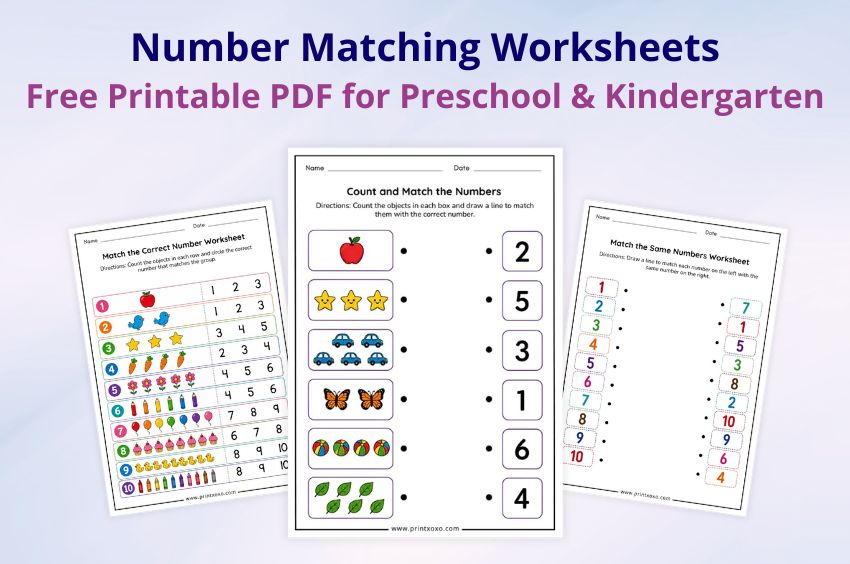
Number Matching Worksheets
Help children connect number symbols with groups of objects.
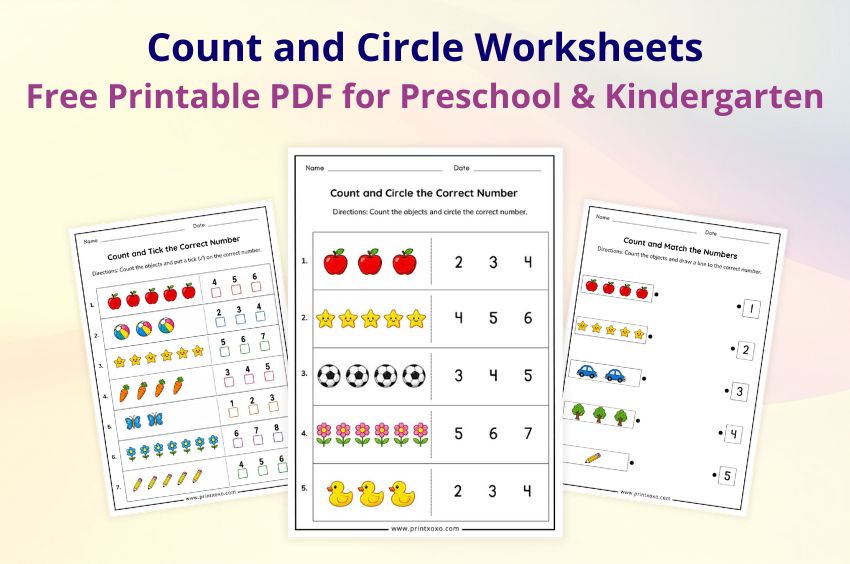
Count and Circle Worksheets
Encourage counting practice while reinforcing number recognition.
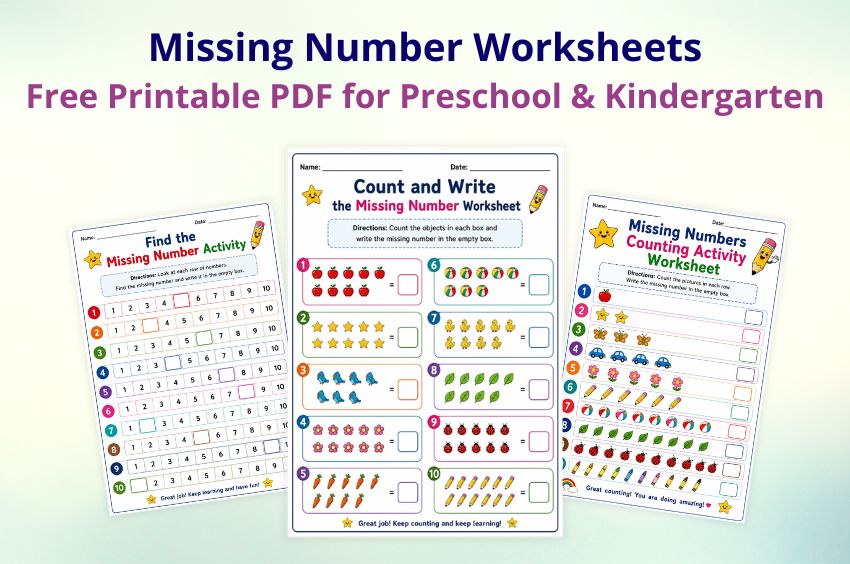
Missing Number Worksheets
Strengthen number sequence understanding and number identification.
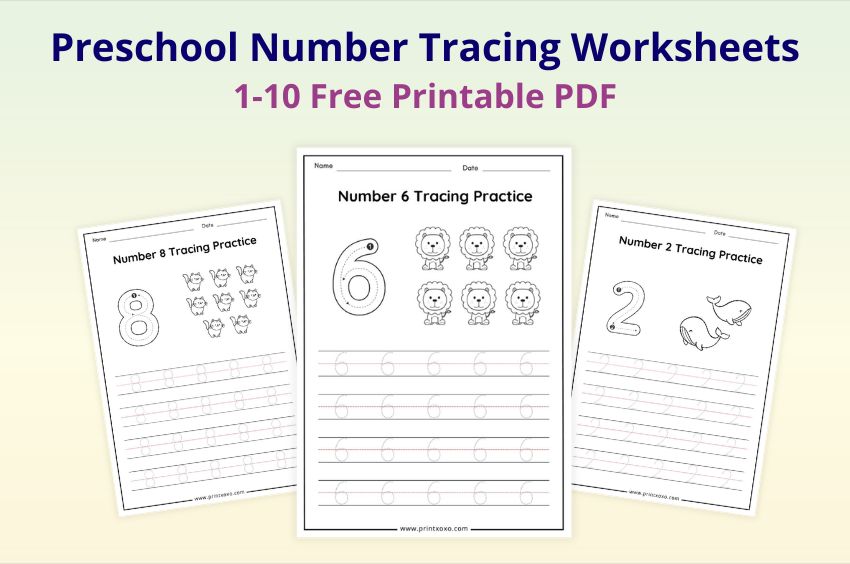
Numbers 1–10 Tracing Worksheets
Support handwriting practice and number formation skills.
Final Thoughts
Learning to recognize numbers is an important step in early childhood education.
The process doesn’t need to be complicated.
Start with everyday numbers. Use simple games. Give children opportunities to explore numbers through play. Add worksheets when they provide extra value.
Most importantly, be patient.
Children learn at different speeds, and number recognition develops gradually through repeated exposure and practice.
A few minutes of learning each day can go a long way.
With time, confidence grows. Numbers become familiar. And the foundation for future math skills becomes much stronger.