

Blog
Living and Non-Living Things Worksheets for Preschool and Kindergarten

One of the first science concepts children learn is understanding the difference between living and non-living things. Long before children study plants, animals, or ecosystems, they begin noticing the world around them. They see birds flying in the sky, trees growing in the yard, toys on the floor, and cars on the road. While many children can identify these objects, they may not always understand why some things are alive while others are not.
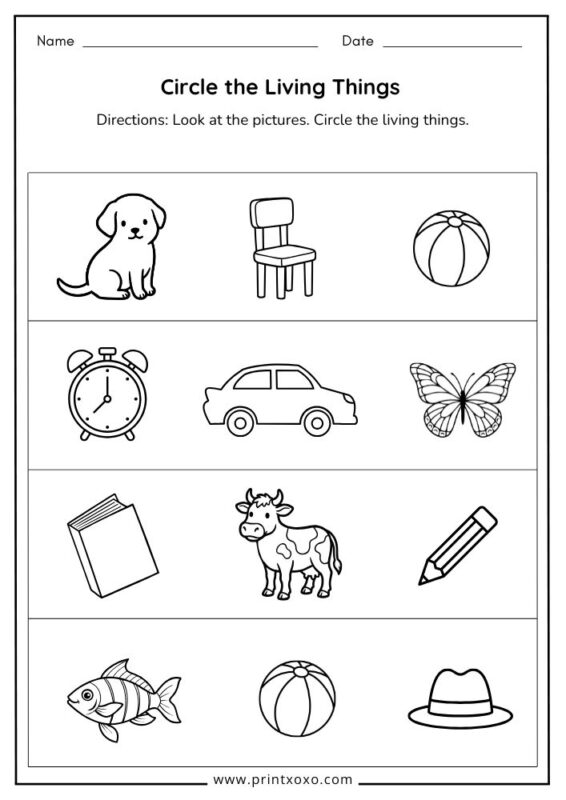
Help children learn the difference between living and non-living things. Students circle the living things shown in the worksheet.
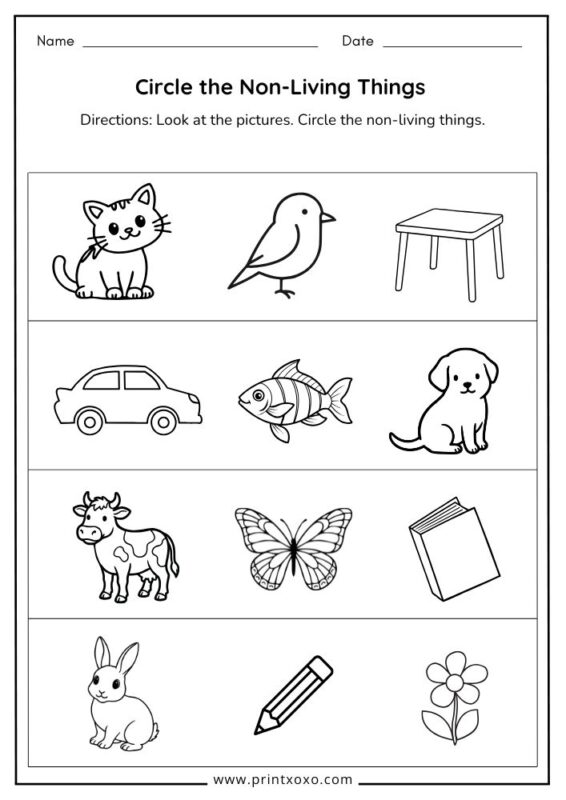
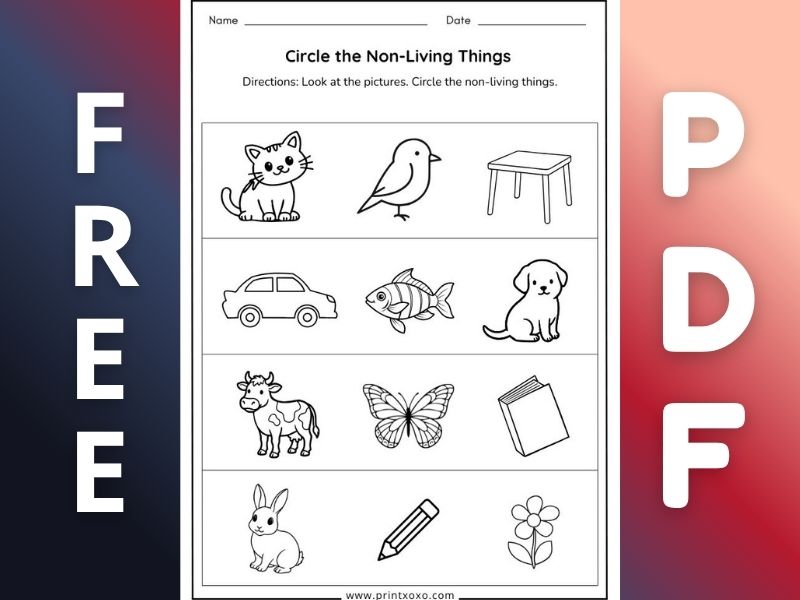
Build observation and classification skills with this simple activity. Children circle all non-living things they can find.
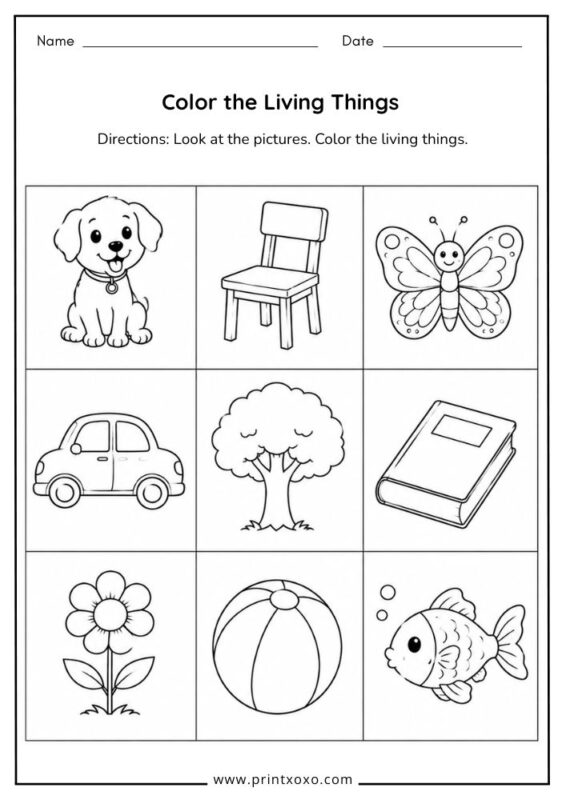
A fun coloring activity for early science learning. Kids color only the living things shown on the page.
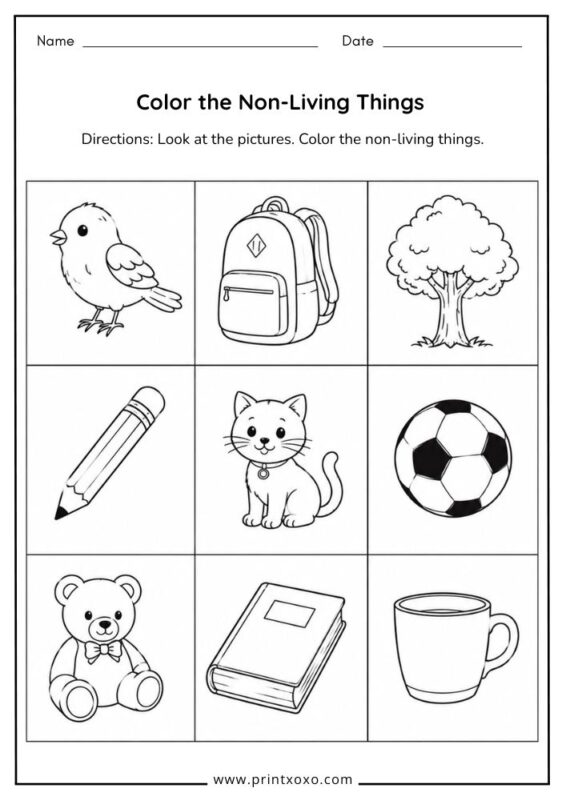
Combine science learning with coloring practice. Students color the non-living objects on the worksheet.
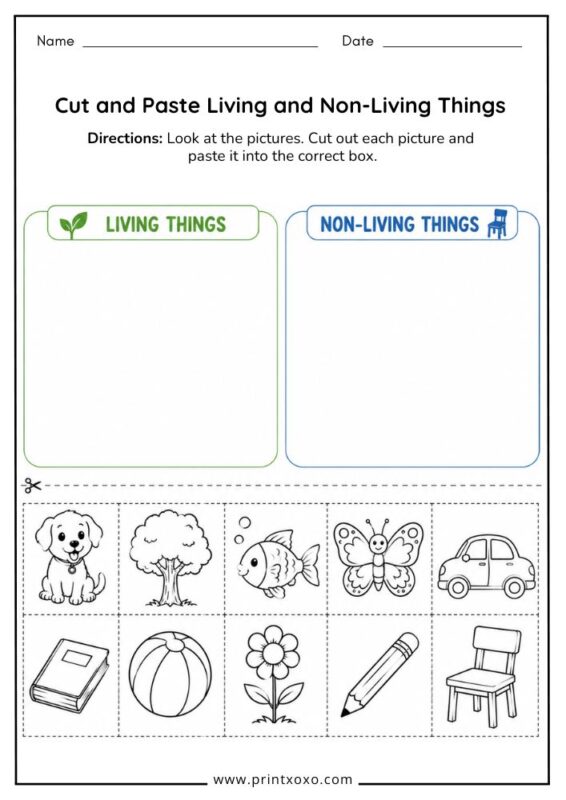
Develop classification and fine motor skills through cutting and pasting. Kids sort living and non-living things into the correct boxes.
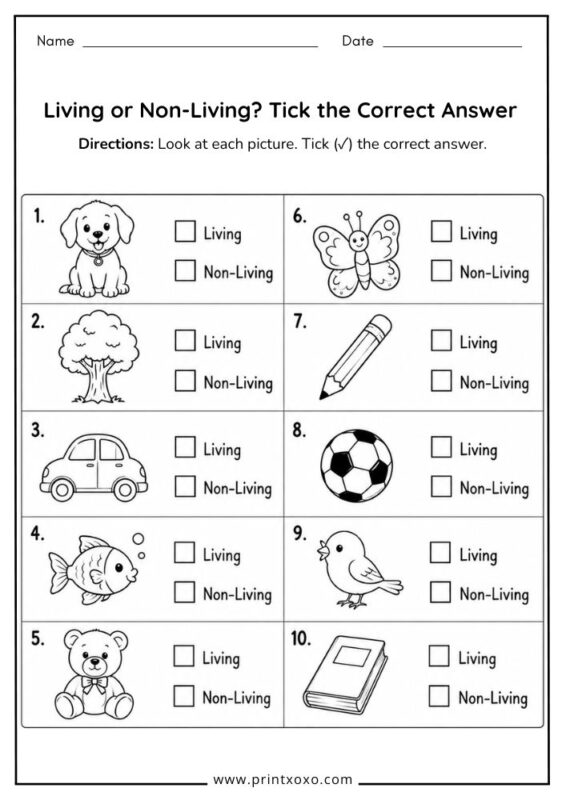
Students look at each picture and choose the correct answer. A simple review activity for preschool and kindergarten learners.
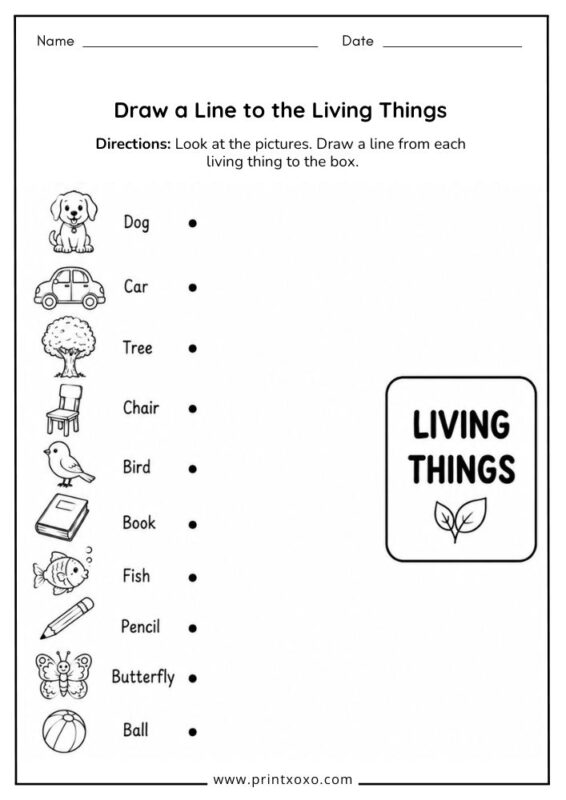
Improve observation and fine motor skills through line tracing. Kids draw lines from living things to the correct box.
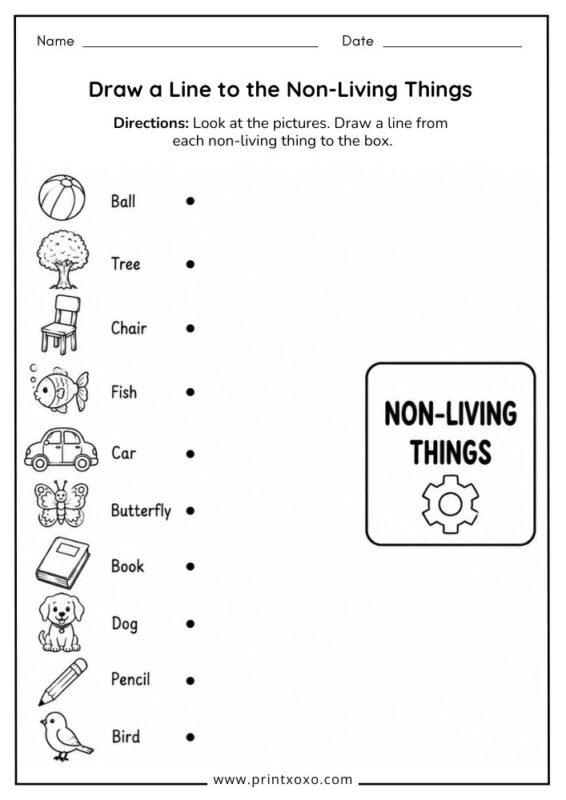
A simple science worksheet for early learners. Students draw lines from non-living things to the correct box.
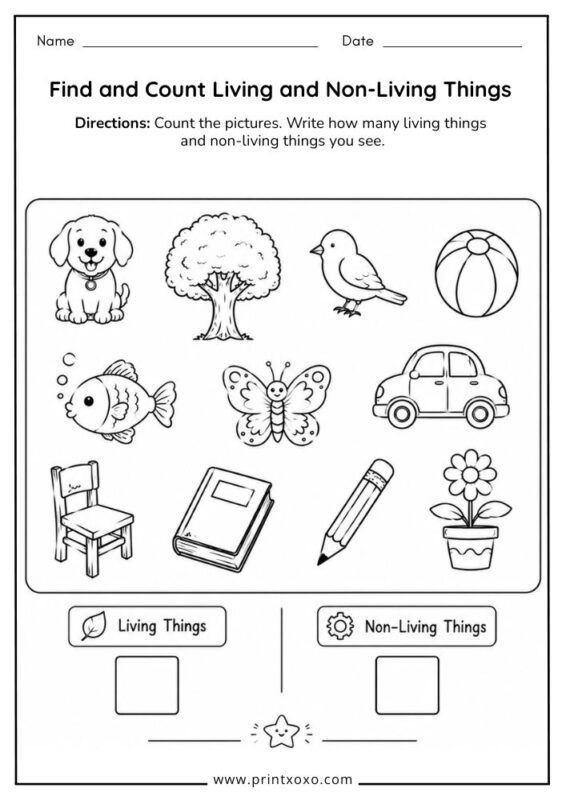
Students count the pictures and record their answers. A fun way to combine science and early math learning.
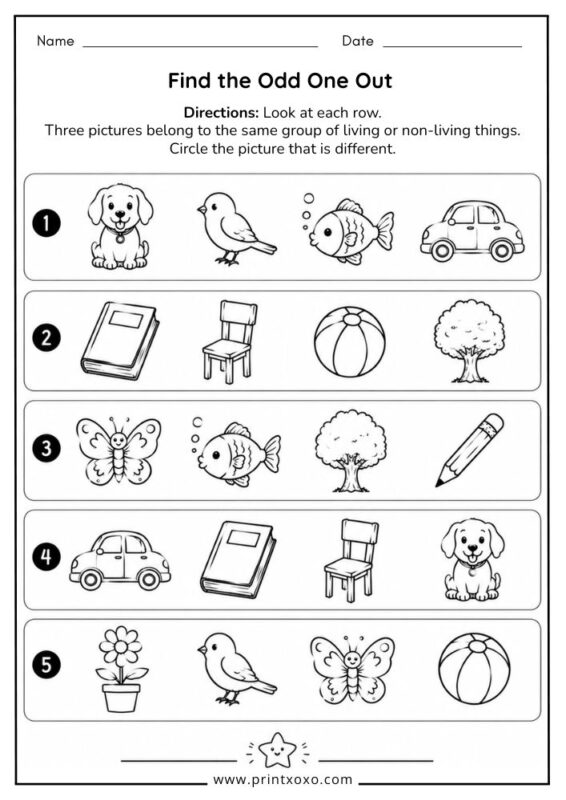
Strengthen reasoning and observation skills with this review activity. Kids circle the picture that is different from the others.
This is where living and non-living things worksheets become valuable learning tools. Through simple activities such as circling, coloring, sorting, counting, and classifying pictures, children gradually learn how to recognize the characteristics of living things and distinguish them from non-living objects.
The printable worksheets included in this collection are designed specifically for preschool and kindergarten learners. Each activity introduces the concept in a visual and age-appropriate way, making it easier for young children to understand and remember.
What Are Living and Non-Living Things?
Living things are things that grow, need food and water, breathe, and reproduce. Animals, birds, fish, insects, trees, flowers, and plants are examples of living things.
Non-living things do not grow, eat, breathe, or reproduce. Objects such as books, chairs, toys, cars, pencils, and balls are examples of non-living things.
For adults, this distinction seems simple. For young children, however, understanding these differences requires observation and repeated practice. Worksheets provide an easy way to reinforce these concepts through hands-on learning.
Why Is It Important for Children to Learn About Living and Non-Living Things?
Learning to classify objects is an important developmental milestone. Before children can understand more advanced science topics, they first learn how to group objects based on shared characteristics.
Activities that involve living and non-living things help children:
- Build observation skills
- Strengthen logical thinking
- Improve classification skills
- Develop early science knowledge
- Expand vocabulary
- Improve visual discrimination
- Practice decision-making skills
When children look at a picture and decide whether it belongs in the living or non-living group, they are doing much more than completing a worksheet. They are learning how to compare information, recognize patterns, and organize knowledge.
Living and Non-Living Things Worksheets Included in This Pack
This worksheet collection includes ten printable activities designed to help children practice identifying, sorting, and understanding living and non-living things.
1. Circle the Living Things Worksheet
This activity introduces the concept in a simple way. Children look at a variety of pictures and circle only the living things.
The worksheet encourages children to observe carefully and identify animals, plants, and other living organisms while ignoring non-living objects.
2. Circle the Non-Living Things Worksheet
After identifying living things, children practice recognizing non-living objects.
This activity helps reinforce the differences between the two groups while improving observation skills.
3. Color the Living Things Worksheet
Young learners often enjoy coloring activities because they combine learning with creativity.
In this worksheet, children color only the living things. This provides another opportunity to identify living organisms while practicing fine motor skills and pencil control.
4. Color the Non-Living Things Worksheet
This worksheet focuses on non-living objects.
Children carefully examine each picture and color only the objects that belong in the non-living category.
5. Cut and Paste Living and Non-Living Things Worksheet
Hands-on activities are especially beneficial for preschool learners.
In this worksheet, children cut out pictures and paste them into the correct category. The activity supports classification skills while also strengthening hand-eye coordination and fine motor development.
6. Living or Non-Living? Tick the Correct Answer Worksheet
This worksheet gives children an opportunity to review what they have learned.
Each picture is accompanied by two answer choices: Living and Non-Living. Children look at the picture and tick the correct answer.
This activity encourages independent thinking and helps children apply their knowledge without relying on visual grouping.
7. Draw a Line to the Living Things Worksheet
This worksheet combines science learning with fine motor practice.
Children identify the living things and draw a line connecting them to the Living Things box. Activities like this help strengthen pencil control while reinforcing classification skills.
8. Draw a Line to the Non-Living Things Worksheet
In this activity, children focus on identifying non-living objects.
By connecting the correct pictures to the Non-Living Things box, learners practice observation, decision-making, and visual discrimination skills.
9. Find and Count Living and Non-Living Things Worksheet
This worksheet introduces an early math component.
Children count how many living things and non-living things appear on the page and write their answers in the provided spaces.
Combining science and counting activities helps children practice multiple skills at the same time.
10. Find the Odd One Out Worksheet
This review activity encourages critical thinking.
Children examine each row of pictures and identify the picture that does not belong to the same group. Some rows contain mostly living things with one non-living object, while others contain mostly non-living objects with one living thing.
This worksheet helps children apply their understanding in a more thoughtful way and serves as an excellent end-of-unit review activity.
How These Worksheets Support Early Science Learning
Science learning in preschool is not about memorizing definitions. Instead, it focuses on helping children observe, compare, ask questions, and make simple connections.
Living and non-living things worksheets provide opportunities for children to interact with pictures, discuss their observations, and think about why certain objects belong to a specific category.
These activities also create opportunities for meaningful conversations between children, parents, and teachers. Asking questions such as “Does it grow?” or “Does it need food?” encourages children to think more deeply about what makes something alive.
As children become more confident identifying living and non-living things, they develop a stronger foundation for future science learning.
Benefits of Using Living and Non-Living Things Worksheets
Printable worksheets continue to be a valuable learning resource because they provide structured practice in an easy-to-understand format.
Some of the benefits include:
- Reinforces early science concepts
- Encourages observation and comparison
- Improves classification skills
- Supports critical thinking development
- Strengthens fine motor skills
- Builds confidence through independent practice
- Creates opportunities for discussion and questioning
- Supports both classroom and home learning
Because these activities use familiar pictures and simple instructions, children can focus on understanding the concept rather than struggling with complicated tasks.
Using These Worksheets in the Classroom
Teachers can use these worksheets as part of science centers, morning work, independent practice, small-group activities, or assessment exercises.
For example:
- Use Circle the Living Things as an introduction activity.
- Follow with Color the Living Things and Color the Non-Living Things.
- Use Cut and Paste activities for hands-on learning.
- Finish with Find the Odd One Out as a review exercise.
This sequence gradually increases the level of thinking required while keeping activities age-appropriate.
Using These Worksheets at Home
Parents can easily incorporate these worksheets into everyday learning.
Before completing a worksheet, encourage children to look around the house or backyard and identify examples of living and non-living things.
Questions such as:
- Is a tree living or non-living?
- Is a bicycle living or non-living?
- Does a dog need food?
- Can a chair grow?
help children connect worksheet learning to real-life experiences.
These simple conversations often make the concept easier to understand and remember.
Frequently Asked Questions
What are living things?
Living things are organisms that grow, need food and water, breathe, and reproduce. Examples include animals, birds, fish, insects, trees, flowers, and plants.
What are non-living things?
Non-living things do not grow, eat, breathe, or reproduce. Examples include books, chairs, toys, cars, pencils, and balls.
Are these worksheets suitable for preschoolers?
Yes. These worksheets are designed specifically for preschool and kindergarten learners. The activities use simple instructions and child-friendly illustrations.
Can these worksheets be used in classrooms?
Absolutely. Teachers can use them for science lessons, independent work, learning centers, homework assignments, or review activities.
Do these worksheets help with skills other than science?
Yes. Many of the activities also support counting, observation, critical thinking, classification, visual discrimination, and fine motor development.
Conclusion
Helping children understand the difference between living and non-living things is an important step in early science education. Through observation, classification, sorting, and discussion, children begin building the foundation for future scientific learning.
These free printable Living and Non-Living Things Worksheets provide a fun and engaging way for preschool and kindergarten learners to explore this concept. Whether used in the classroom, at home, or during homeschool lessons, these activities encourage children to think, observe, compare, and learn through hands-on practice.
Download the worksheets, print your favorites, and help young learners discover the fascinating world of living and non-living things through fun educational activities.