

Blog
Butterfly Life Cycle Worksheets – Free Printable PDF

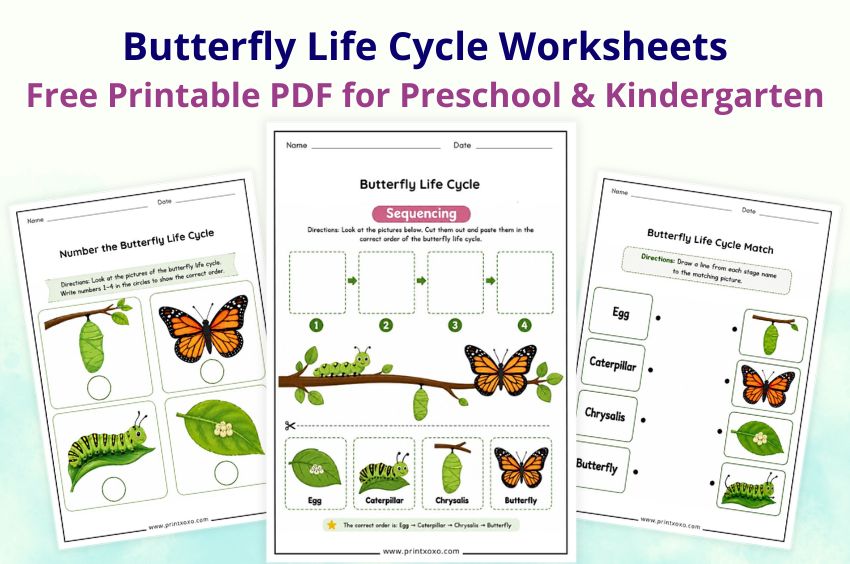
Watching a butterfly grow from a tiny egg into a colorful adult is one of the most exciting science lessons for young children. These printable Butterfly Life Cycle Worksheets help preschool and kindergarten kids learn each stage through fun, hands-on activities that are easy to use at home or in the classroom.
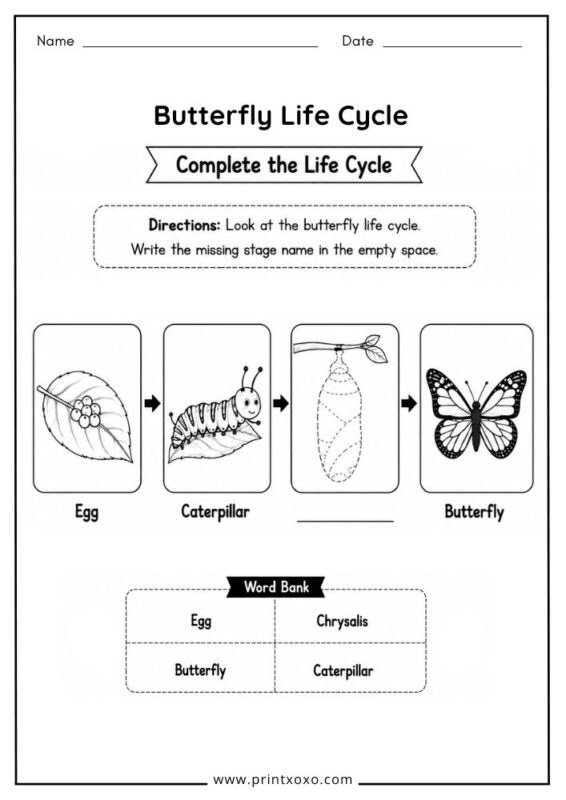
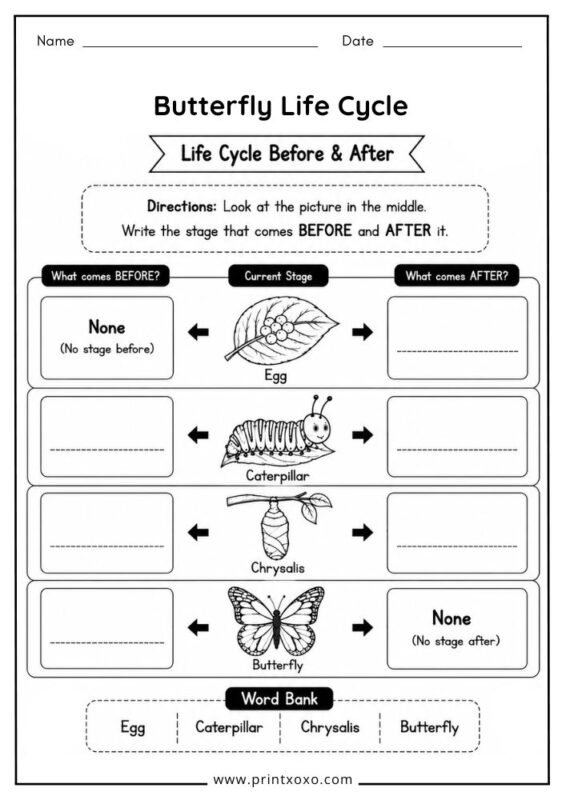
What Is the Butterfly Life Cycle?
Butterflies may look delicate, but they go through an amazing transformation before they ever spread their wings. Instead of growing the way people or many animals do, a butterfly changes completely through a process called metamorphosis.
The butterfly life cycle has four stages:
- Egg
- Caterpillar (Larva)
- Chrysalis (Pupa)
- Adult Butterfly
Each stage has its own purpose. The caterpillar spends its time eating and growing, while the chrysalis is where the biggest change happens. Finally, an adult butterfly emerges and begins the cycle all over again by laying eggs.
Teaching this concept at an early age helps children understand that living things grow and change over time.
Why Children Love Learning About Butterflies
Butterflies are one of the easiest insects for children to recognize. Many families see them in parks, gardens, flower beds, nature trails, or even in their own backyard during spring and summer.
When children can connect what they learn on paper with something they have seen outside, science becomes much easier to understand.
For example, if a child notices a butterfly resting on flowers during a family picnic or while playing at the park, they naturally become curious about where it came from. That’s the perfect opportunity to introduce the butterfly life cycle using simple printable worksheets.
Instead of memorizing facts, children begin making real-world connections.
The Four Stages of the Butterfly Life Cycle
Egg
Every butterfly begins as a tiny egg. Female butterflies carefully lay their eggs on leaves because that’s where the baby caterpillar will find food after it hatches.
Although the eggs are very small, this is the first stage of the butterfly’s life.
Caterpillar (Larva)
Once the egg hatches, a caterpillar comes out.
This stage is all about eating and growing. Caterpillars spend most of their time chewing leaves because they need plenty of energy to grow bigger.
As they grow, they shed their skin several times. Children are often surprised to learn that caterpillars can eat far more than they weigh.
Chrysalis (Pupa)
After growing enough, the caterpillar forms a chrysalis.
From the outside, it may look like nothing is happening, but inside, one of nature’s most fascinating transformations is taking place.
The caterpillar slowly changes into a butterfly during this stage.
This process is called metamorphosis, and it is one of the reasons butterflies are such a popular science topic for young learners.
Adult Butterfly
When the transformation is complete, an adult butterfly emerges from the chrysalis.
Its wings are soft at first, so it waits until they dry before flying.
Adult butterflies visit flowers to drink nectar and help pollinate plants as they move from one flower to another.
Eventually, the butterfly lays eggs, and the life cycle begins again.
What You’ll Find in These Worksheets
This collection includes different activities so children practice the butterfly life cycle in more than one way.
Current printable worksheets include:
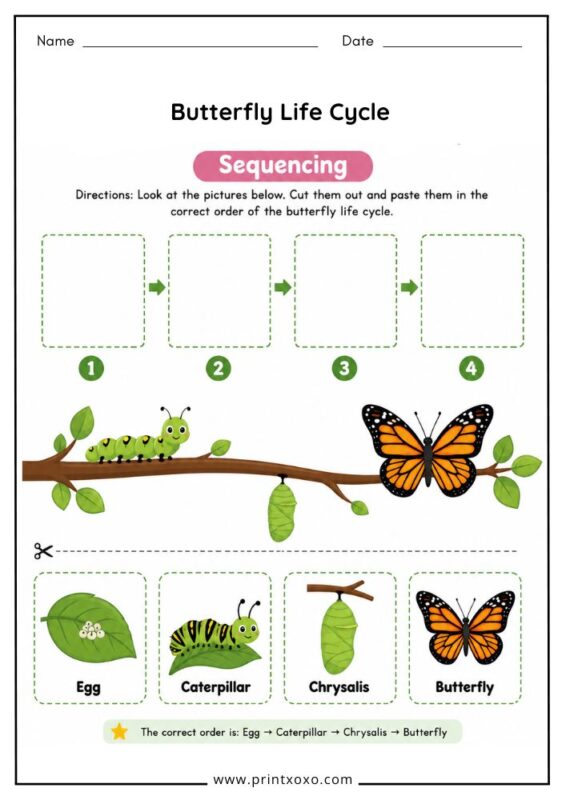
- Butterfly Life Cycle Sequencing
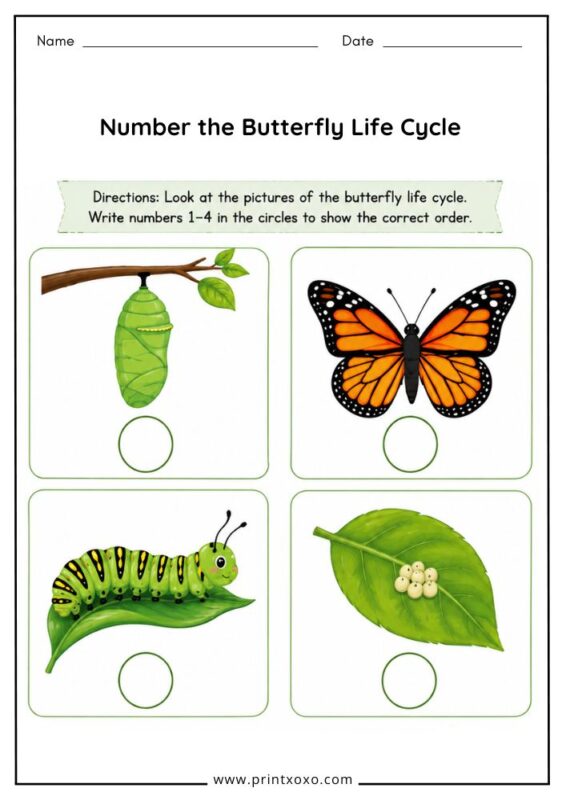
- Number the Butterfly Life Cycle
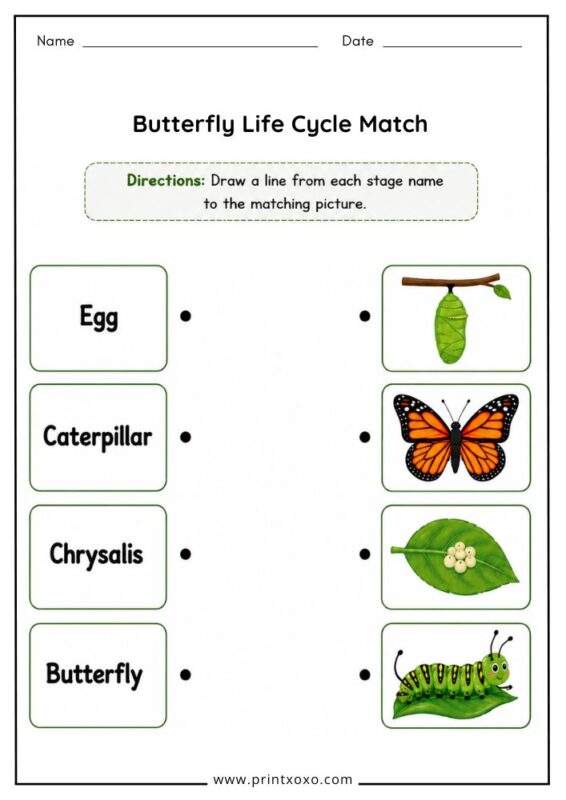
- Butterfly Life Cycle Match
- Complete the Butterfly Life Cycle
- Butterfly Life Cycle Before & After
Each worksheet focuses on a different learning skill, helping children understand the topic instead of simply memorizing it.
More butterfly life cycle worksheets will be added over time, so be sure to check back for new printable activities.
Skills Children Practice
These worksheets support much more than science.
Children also practice:
- Sequencing skills
- Observation
- Matching pictures and words
- Critical thinking
- Early science vocabulary
- Visual discrimination
- Fine motor skills while writing or drawing lines
- Following directions
Because every worksheet has a different activity, children stay engaged without feeling like they are repeating the same task.
Ways to Use These Worksheets
These worksheets work well in many learning environments.
Parents can print them for extra learning at home.
Teachers can include them in spring science units, insect studies, or nature-themed lessons.
Homeschool families can add them to weekly science activities.
They also work well for:
- Morning work
- Science centers
- Independent practice
- Small group activities
- Homework
- Early finishers
- Review lessons
Simply print the worksheet and let children learn at their own pace.
Fun Butterfly Facts for Kids
Learning becomes even more exciting when children discover interesting facts.
Here are a few fun butterfly facts:
- Every butterfly starts life as a tiny egg.
- Butterflies use their long tube-like tongue to drink nectar from flowers.
- Some butterflies travel hundreds or even thousands of miles during migration.
- Butterflies help flowers by carrying pollen from one plant to another.
- There are thousands of butterfly species found around the world.
- No two butterflies look exactly the same.
- Butterflies are active during the daytime, unlike many moths.
These simple facts can be discussed before or after completing the worksheets.
Tips for Parents and Teachers
Worksheets are most effective when children can connect them with real experiences.
After finishing these activities, try asking questions such as:
- Which stage comes first?
- Which stage eats the most?
- What happens inside the chrysalis?
- Which stage can fly?
If possible, visit a local botanical garden, community park, or butterfly garden during spring or summer. Even spotting one butterfly on a flower can make the lesson more meaningful.
Reading a picture book about butterflies or watching the life cycle through educational videos can also reinforce what children learned on the worksheets.
Frequently Asked Questions
What are the four stages of the butterfly life cycle?
The butterfly life cycle has four stages: Egg, Caterpillar (Larva), Chrysalis (Pupa), and Adult Butterfly.
What age are these worksheets designed for?
These worksheets are best suited for preschool, kindergarten, and early elementary students who are beginning to learn basic life science concepts.
Can these worksheets be used in the classroom?
Yes. Teachers can use them for science centers, independent practice, morning work, homework, or small group activities.
Are these worksheets good for homeschool?
Absolutely. They are easy to print and work well for homeschool science lessons, nature studies, and spring-themed activities.
Do I need special supplies?
No. Simply print the worksheet and use a pencil, crayons, or colored pencils if needed. Some activities may also use child-safe scissors and glue for cut-and-paste practice.
Final Thoughts
Learning about the butterfly life cycle helps children understand how living things grow and change in nature. With these printable worksheets, young learners can practice sequencing, matching, observation, and early science skills through fun, hands-on activities.
Download your favorite worksheets, print them in the paper size that fits your printer, and enjoy exploring one of nature’s most fascinating life cycles.