Blog
Telling Time Worksheets for Kindergarten and 1st Grade: Hour and Half Hour (Free PDF)

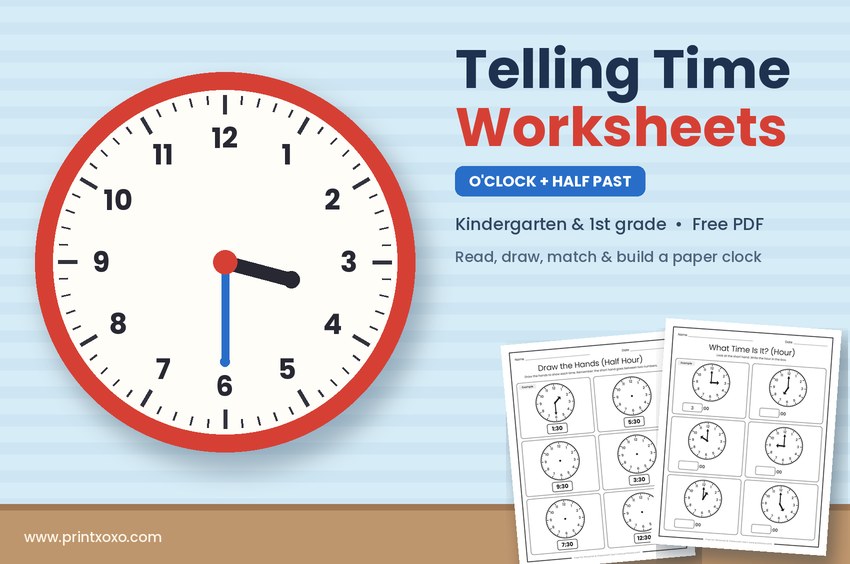
These free telling time worksheets teach kids to read a clock one small step at a time. There are 11 printable pages for kindergarten and 1st grade, about ages 5 to 7. They start with the parts of a clock and the numbers 1 to 12, move on to telling time to the hour, then to the half hour. Every page is a PDF in US Letter (8.5 x 11 in) and A4.
Kids read the time on analog clocks, draw the hands, match clocks to digital times, and cut and paste times under the right clock. Two more pages bring time into real life: a “My Day” page where kids show when they wake up, eat and go to bed, and a paper clock with hands that really turn.
Download the Telling Time Worksheets
Press Download or Print under a worksheet and choose your paper size. US Letter is for the US and Canada. A4 is for most other countries.
What’s on Each Page
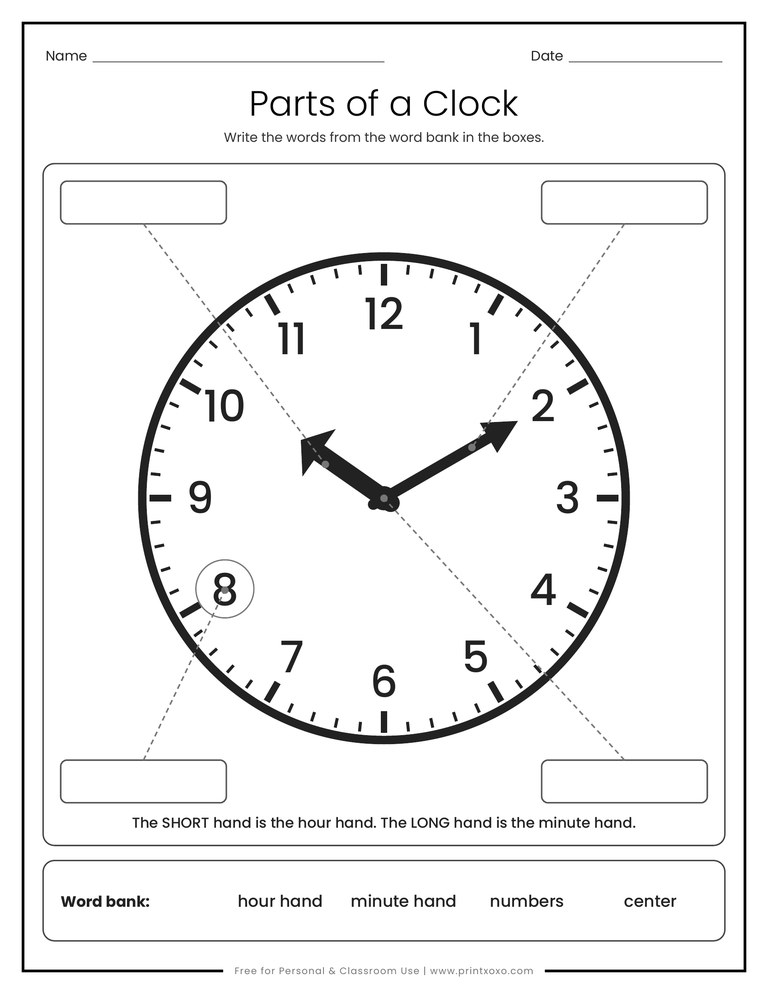
- Parts of a Clock: label the hour hand, minute hand, numbers and center using a word bank.
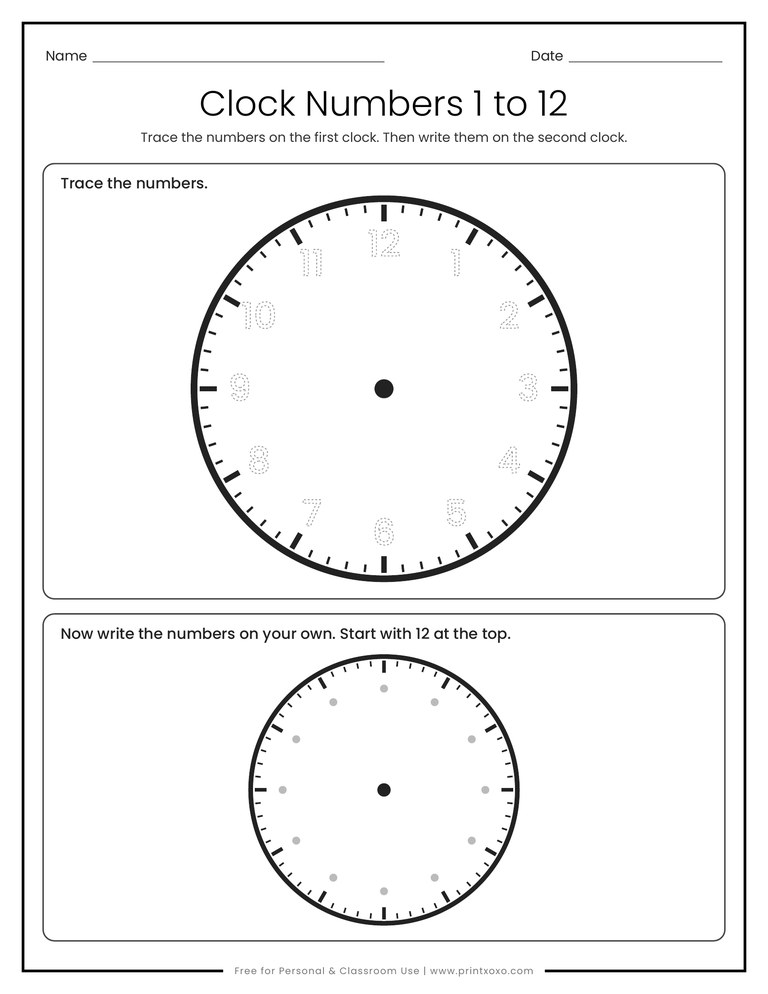
- Clock Numbers 1 to 12: trace the numbers around a clock face, then write them on a second clock with dots to show where each number goes.
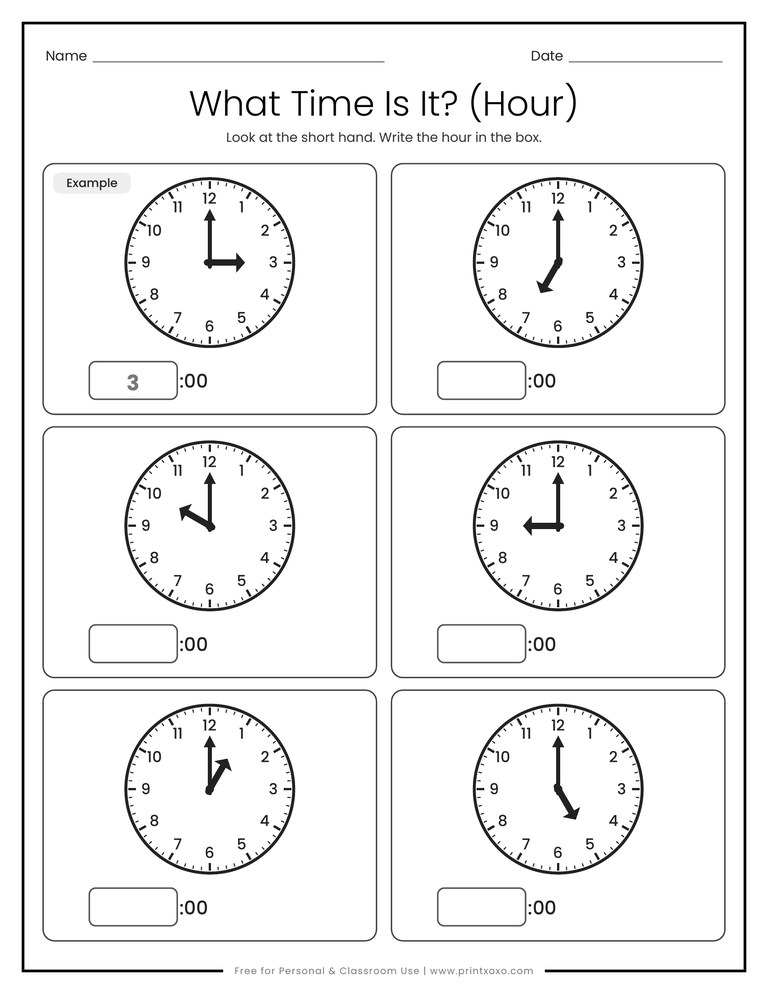
- What Time Is It? (Hour): six clocks showing o’clock times. Kids look at the short hand and write the hour.
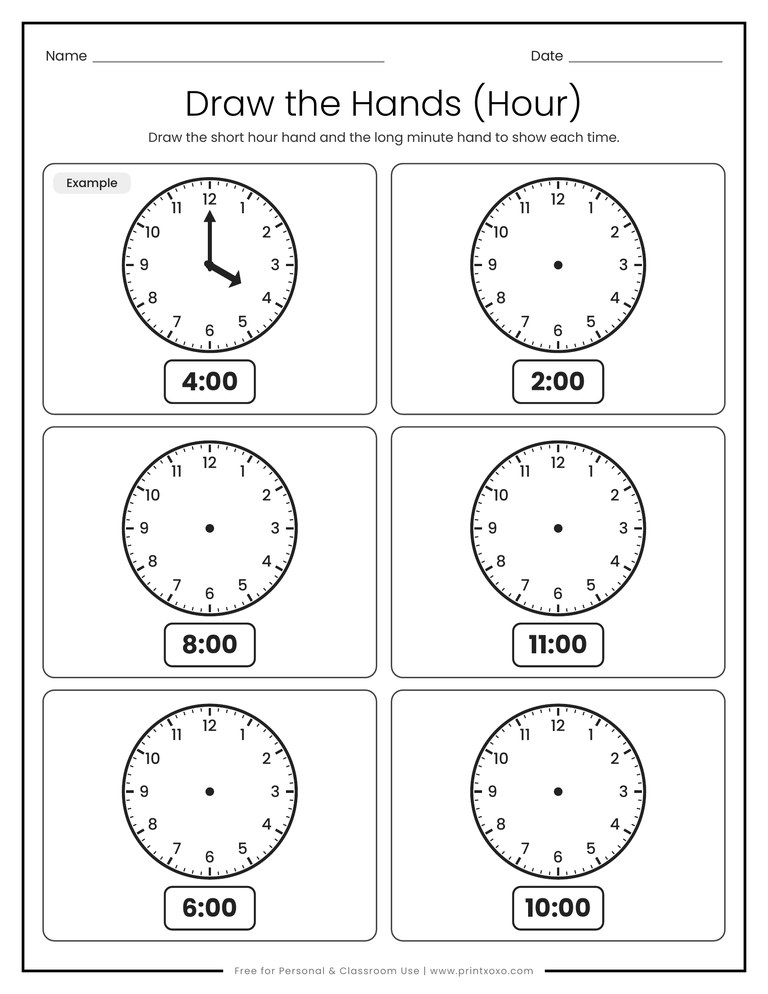
- Draw the Hands (Hour): read the digital time and draw both hands. The long hand always points to 12.
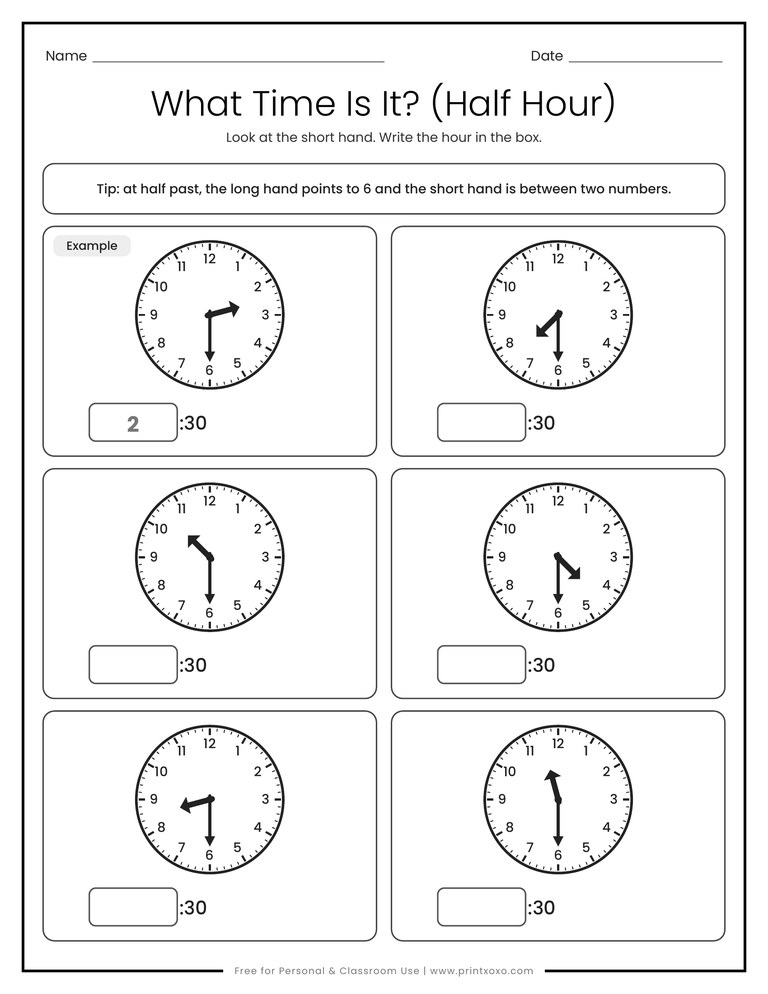
- What Time Is It? (Half Hour): six half past clocks with a tip at the top: the long hand points to 6, and the short hand sits between two numbers.
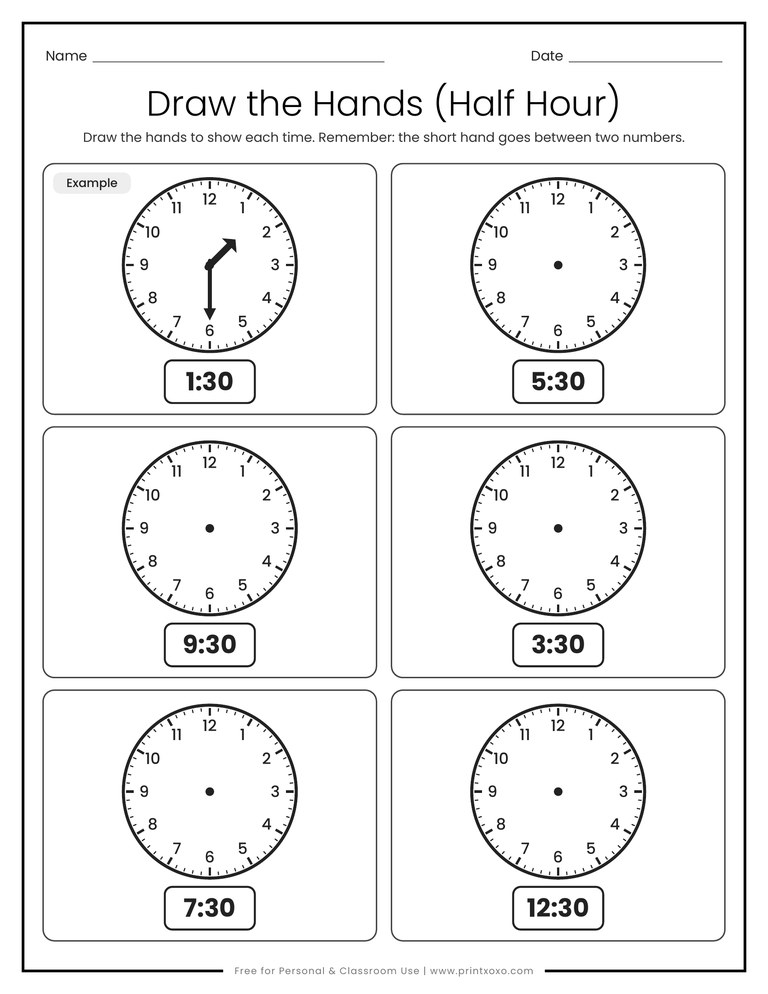
- Draw the Hands (Half Hour): draw the hands for times like 5:30 and 9:30.
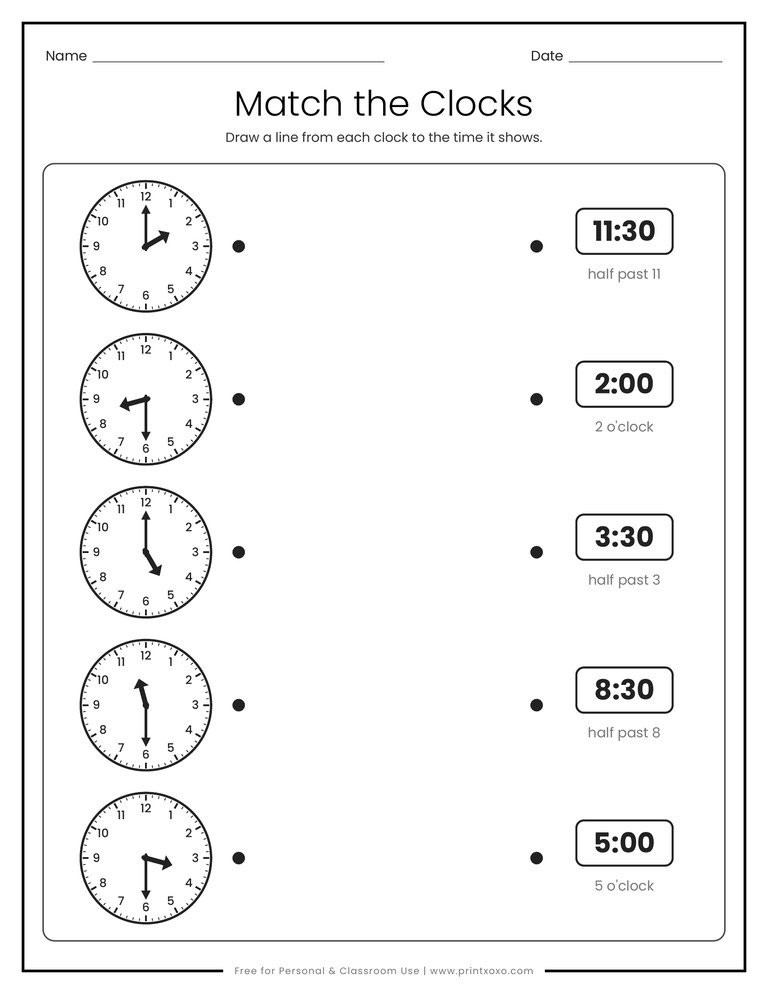
- Match the Clocks: draw a line from each analog clock to its digital time. The words (“half past 8”) are printed under each time too.
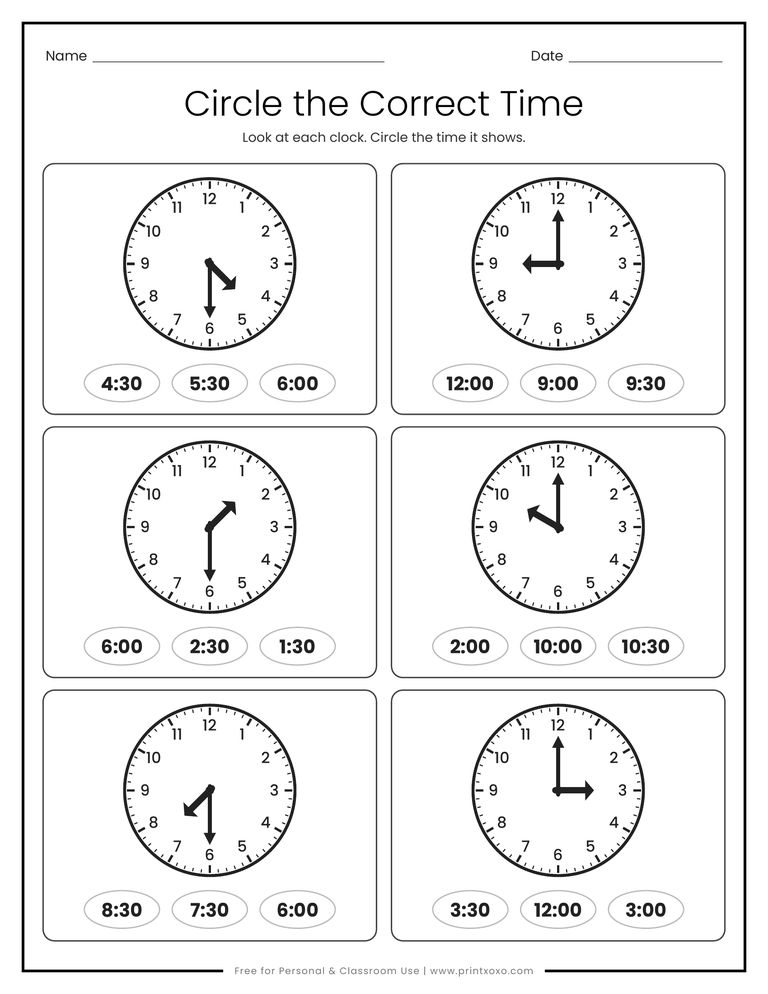
- Circle the Correct Time: three choices for each clock, mixing o’clock and half past.
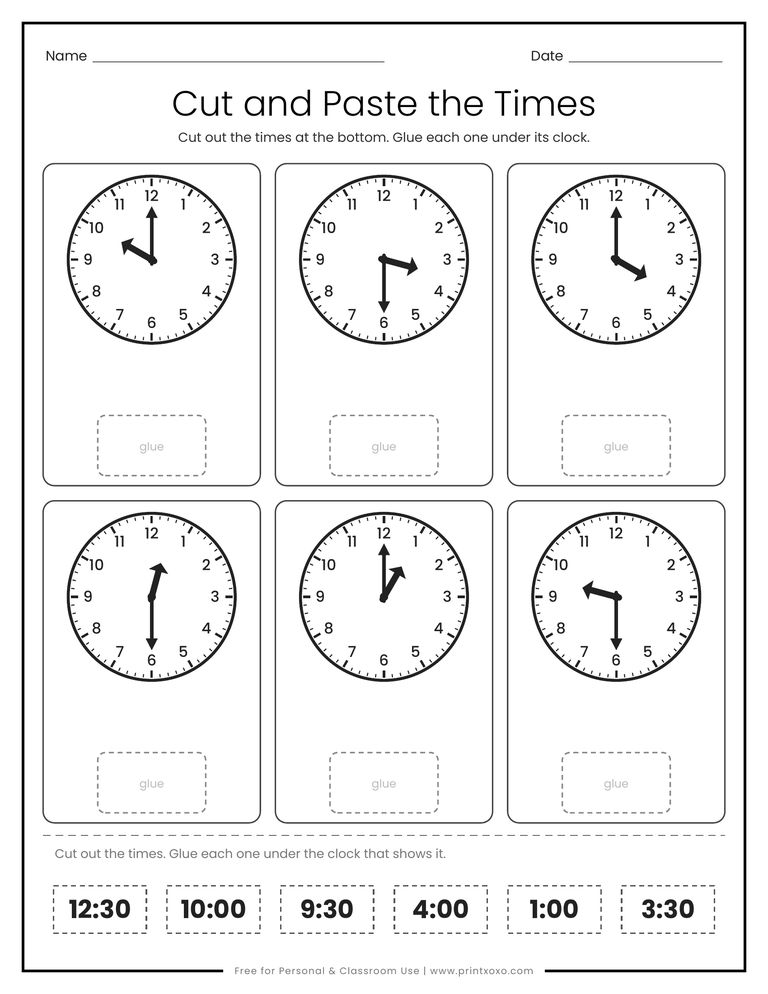
- Cut and Paste the Times: cut out six digital times and glue each under its clock. The glue boxes are a little bigger than the cards.
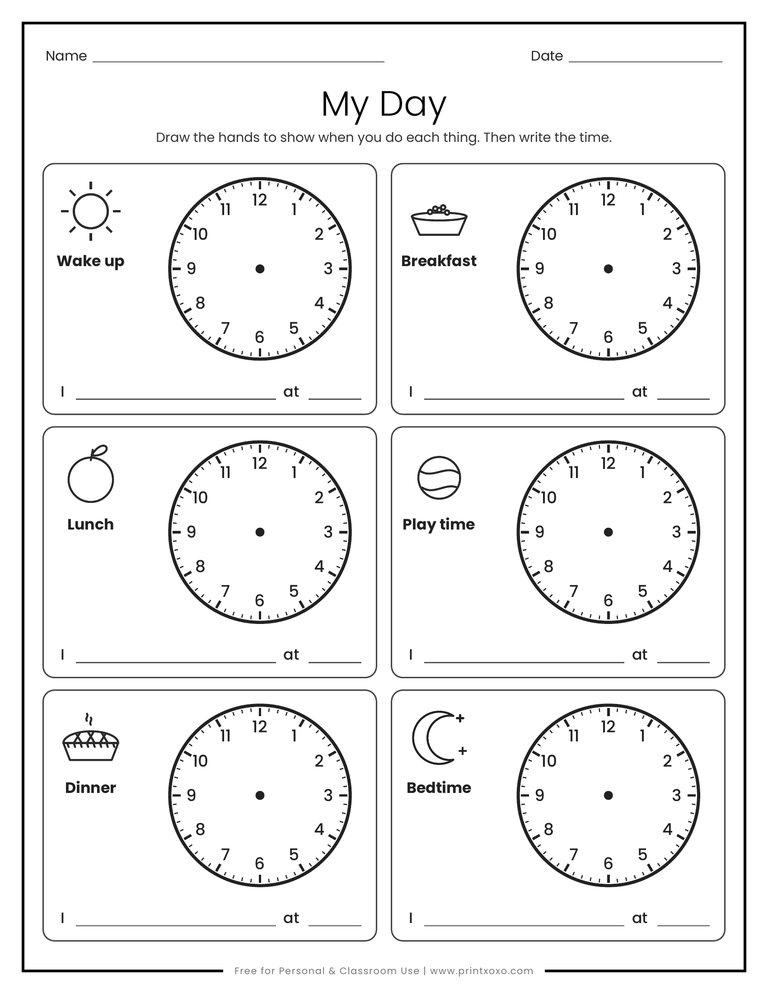
- My Day: wake up, breakfast, lunch, play time, dinner and bedtime. Kids draw the hands for their own day and finish the sentence.
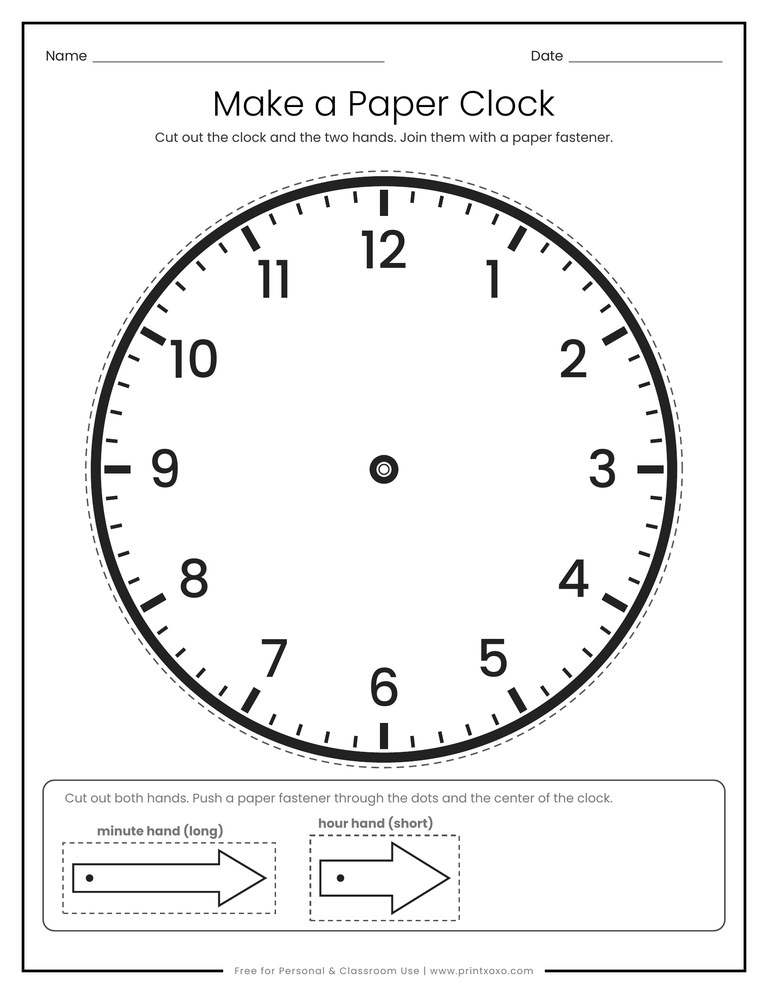
- Make a Paper Clock: a big clock face with an hour hand and minute hand to cut out and join with a paper fastener.
How to Teach Telling Time, Step by Step
- Start with the numbers. Kids need to know where 1 to 12 go on the clock before anything else. The clock numbers page is the place to begin.
- Short hand first. Teach that the short hand tells the hour. Cover the long hand with a finger and just read the short one.
- O’clock. When the long hand points straight up to 12, it’s exactly that hour: 3 o’clock, or 3:00.
- Half past. When the long hand points straight down to 6, half an hour has gone by: half past 3, or 3:30.
- Connect it to their day. Use the My Day page and the paper clock to show real times: “We eat lunch at 12:00.”
The Most Common Mistake at Half Past
At 3:30, the short hand is not on 3. It’s halfway between 3 and 4, because half the hour has already passed. Many kids see the short hand near 4 and say “4:30.” Tell them: when the short hand is between two numbers, the hour is the number it has already passed, which is the smaller one. (12:30 is the one exception: the hand is between 12 and 1, and the hour is 12.)
What Kids Learn in Kindergarten and 1st Grade
In kindergarten, most kids learn the parts of a clock and start reading time to the hour. In 1st grade, the Common Core standard (1.MD.B.3) asks kids to tell and write time in hours and half hours using both analog and digital clocks. This set covers both. The first four pages and the paper clock fit kindergarten. The half hour pages, the mixed practice pages and My Day are for 1st grade or kids who are ready for more.
Tips and Games
- Clock spotter: point out clocks at home, school and the store, and ask “Where is the short hand?”
- Paper clock quiz: call out a time and have kids show it on their paper clock. Then switch roles.
- Print the paper clock on cardstock so the hands stay stiff.
- Print at 100% or “Actual size” so the cut and paste cards fit the glue boxes.
Frequently Asked Questions
What age should kids learn to tell time?
Most kids start learning time to the hour around age 5 or 6, in kindergarten. Half hours usually come in 1st grade, around age 6 or 7.
Should I teach the hour or the half hour first?
The hour first. Once kids can read o’clock times without help, half past is a short next step.
Are these worksheets free?
Yes, free for personal and classroom use. Please don’t sell them or upload the files to another site. Share a link to this page instead.
What do I need for the paper clock?
Scissors, cardstock if you have it, and one paper fastener (a brad). Push it through the dot on each hand and the center of the clock so the hands can turn.