

Blog
Five Senses Worksheets | Free Printable Activities for Preschool & Kindergarten

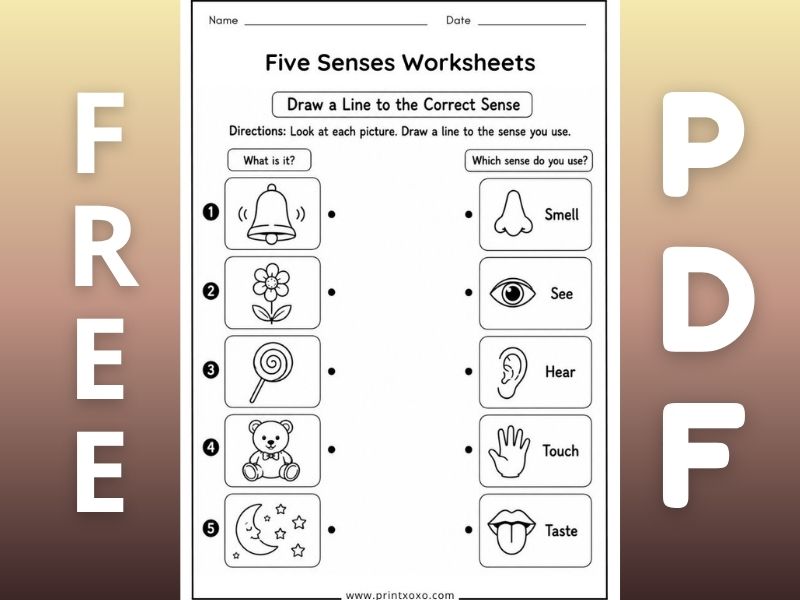
Children learn about the world by using their five senses—seeing, hearing, smelling, tasting, and touching. These free printable Five Senses Worksheets help preschool and kindergarten children explore each sense through fun activities like matching, drawing lines, mazes, and cut-and-paste games. Download the free PDF below and enjoy hands-on science learning at home or in the classroom.
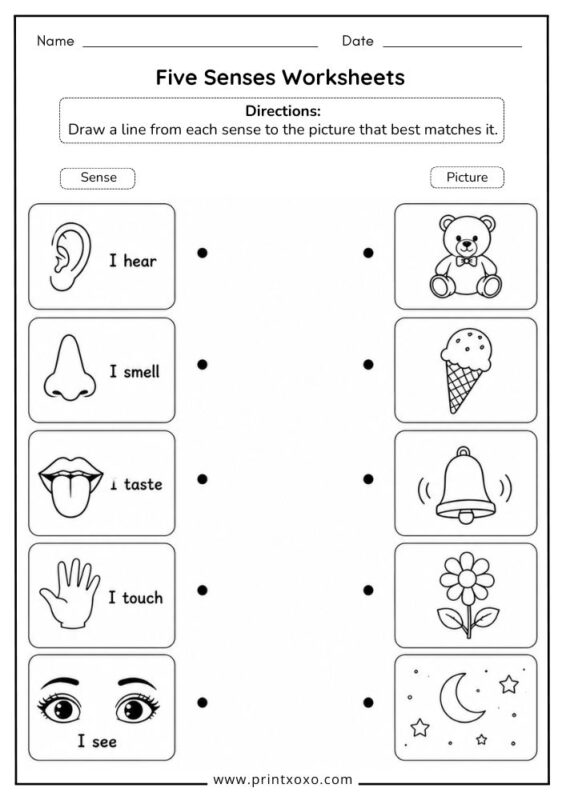
Help children learn the five senses with this simple matching activity. Draw a line to connect each sense to the correct picture.
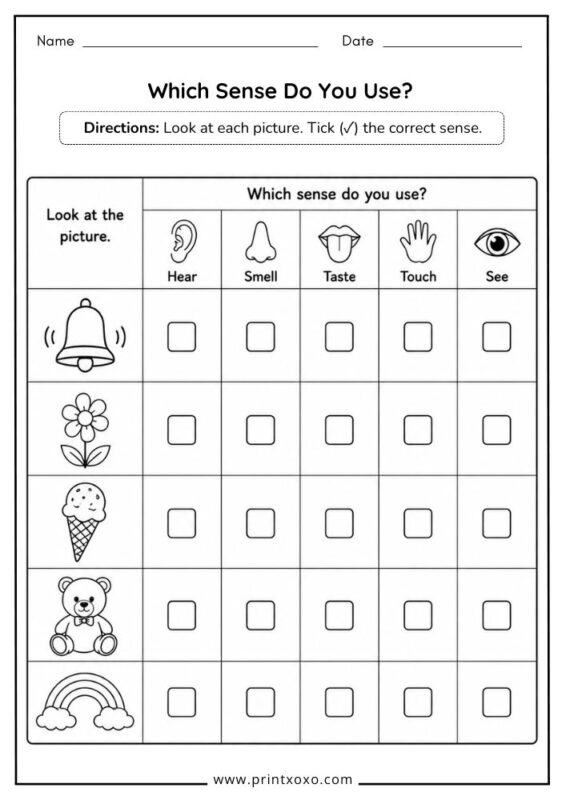
Look at each picture and choose the correct sense. A simple activity that builds observation skills.
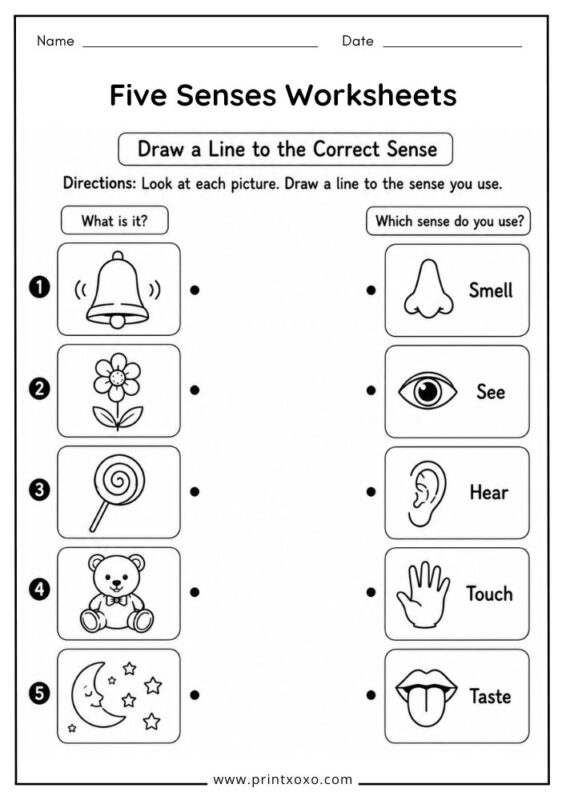
Practice identifying the correct sense for everyday objects. Simply draw a line to complete each match.
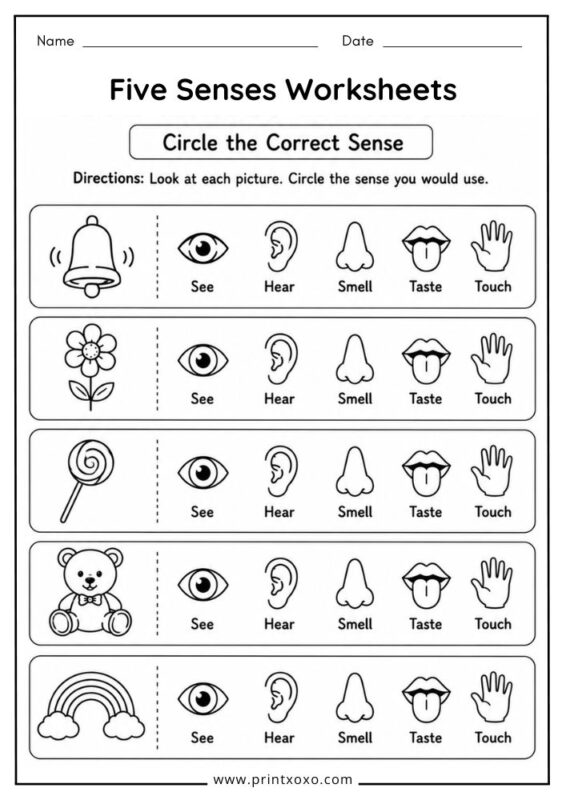
Learn how we use our five senses with this fun circle activity. Circle the correct answer for every picture.
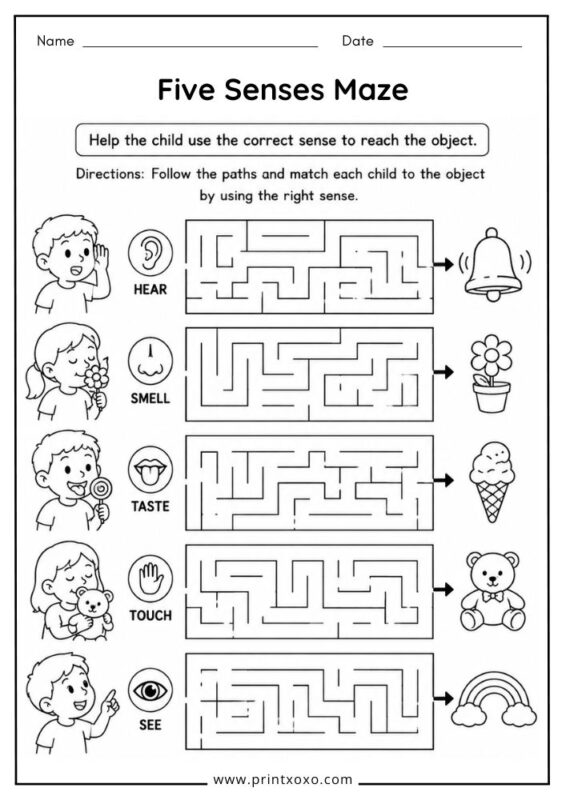
Enjoy a fun maze while learning about the five senses. Follow the correct path to reach each object.
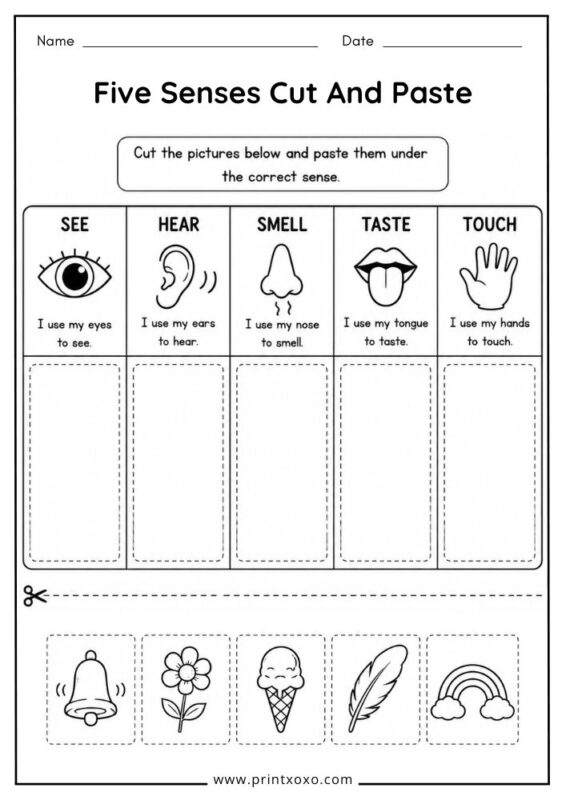
Practice sorting pictures into the correct sense category. Cut, paste, and learn with this hands-on activity.
Why Learning About the Five Senses Is Important
One of the first science topics children learn in preschool is the five senses. Long before they begin studying plants, animals, or weather, they discover the world by looking, listening, smelling, tasting, and touching. Every day, children use their senses without even thinking about it, making this one of the easiest science concepts to teach through real-life experiences.
As an early childhood teacher, I’ve found that children understand new concepts much faster when they can connect them to things they already know. Instead of simply memorizing that we have five senses, they begin to understand why each sense is important. They learn that their ears help them hear music, their nose helps them smell flowers, and their tongue lets them taste different foods.
These simple discoveries encourage curiosity while helping children become better observers of the world around them.
Learning about the five senses also supports many other early learning skills, including:
- Observation and attention to detail
- Vocabulary development
- Critical thinking
- Speaking and listening skills
- Comparing and classifying objects
- Fine motor development
- Early science understanding
Because children use their senses every day, these activities feel natural rather than difficult. That makes learning both enjoyable and meaningful.
What’s Included in This Free Five Senses PDF?
This printable worksheet pack includes six different activities that introduce the five senses in fun and engaging ways. Instead of repeating the same type of exercise, each worksheet focuses on a different skill, giving children multiple opportunities to practice what they have learned.
Inside this free PDF, you’ll find:
- Match the Sense to the Picture
- Which Sense Do You Use?
- Draw a Line to the Correct Sense
- Circle the Correct Sense
- Five Senses Maze
- Five Senses Cut and Paste
Each activity has a different purpose. Some worksheets help children recognize the five senses, while others encourage observation, decision-making, matching, and hands-on learning. Together, they create a well-rounded introduction to one of the most important science topics taught during the preschool and kindergarten years.
Match the Sense to the Picture
This worksheet is a great starting point because it introduces the five senses in a simple and visual way. Children look at each sense and draw a line to the picture that matches it.
Matching activities help children make meaningful connections instead of simply memorizing information. For example, they quickly learn that a bell is connected with hearing, a flower with smelling, and a lollipop with tasting.
While completing this worksheet, encourage children to explain their answers. Asking simple questions like “Which sense helps you hear the bell?” or “How do you smell a flower?” helps reinforce learning and builds confidence.
Which Sense Do You Use?
After children recognize the five senses, they are ready to think a little deeper.
In this activity, children look at each picture and decide which sense they would use. They simply tick the correct answer.
Although the worksheet is easy to complete, it encourages children to stop, observe, and think before making a choice. This strengthens decision-making skills while reinforcing the purpose of each sense.
Parents and teachers can make this activity even more engaging by asking children to explain why they selected each answer. These short conversations help improve both science understanding and language development.
Draw a Line to the Correct Sense
Drawing lines is often one of the most enjoyable worksheet activities for young learners. It feels more like a game than a lesson, while still providing valuable learning opportunities.
In this worksheet, children carefully observe each picture before connecting it to the correct sense. Since the answers are mixed instead of being placed directly across from each other, children need to pay attention before drawing each line.
This simple challenge improves observation skills, concentration, and visual discrimination while giving children more practice identifying the five senses.
As children complete these first three worksheets, they build a strong foundation that prepares them for the remaining activities in this printable pack.
Circle the Correct Sense
By this stage, children usually recognize all five senses, so this worksheet gives them another opportunity to practice what they have learned.
Each picture is paired with several sense options, and children simply circle the correct one. Although the activity looks easy, it encourages children to stop and think before making a decision.
This worksheet also helps teachers and parents quickly identify whether a child truly understands the concept or is simply guessing. If a child circles the wrong answer, it becomes a great opportunity to ask simple follow-up questions and reinforce the correct sense through conversation.
Five Senses Maze
Young children love maze activities because they feel like puzzles rather than traditional schoolwork.
In this worksheet, children follow the correct path to connect a sense with its matching picture. While completing the maze, they continue reviewing the five senses without even realizing they are practicing science concepts.
Maze activities also strengthen several important early learning skills, including:
Problem-solving
Visual tracking
Hand-eye coordination
Pencil control
Concentration
These skills support reading and writing development later on, making maze worksheets a valuable addition to any preschool learning routine.
Five Senses Cut and Paste
Hands-on activities are often the most memorable for young learners.
In this worksheet, children cut out the pictures and paste each one under the correct sense. This simple activity combines science learning with fine motor practice, making it both educational and engaging.
Cut-and-paste worksheets help children slow down and think carefully about each picture before deciding where it belongs. Instead of rushing through the activity, they actively sort and organize information, which helps strengthen memory and understanding.
Parents can make this activity even more enjoyable by asking questions during the sorting process, such as:
Which sense helps you smell a flower?
Which sense do you use when you hear a bell?
Which sense helps you taste a lollipop?
Small conversations like these often have a bigger impact than simply giving children the correct answers.
Fun Ways to Use These Worksheets
Printable worksheets work best when they are combined with real-life experiences.
After completing a worksheet, encourage children to explore the world around them using their five senses.
Some simple ideas include:
Smell different flowers in the garden.
Listen carefully to birds singing outside.
Taste different fruits and describe their flavors.
Feel soft and rough objects around the house.
Look for colorful objects during a short nature walk.
Connecting worksheets with everyday experiences helps children remember what they learn for much longer.
Skills Children Develop
Although these activities focus on science, they also support many other important preschool skills.
Children practice:
Observation
Critical thinking
Matching and classification
Decision-making
Vocabulary development
Fine motor skills
Visual discrimination
Concentration
Early science knowledge
Because every worksheet uses a different activity style, children stay engaged while practicing the same core concept in multiple ways.
Frequently Asked Questions
What are the five senses?
The five senses are seeing, hearing, smelling, tasting, and touching. They help children explore, understand, and interact with the world around them every day.
What age are these worksheets suitable for?
These printable worksheets are ideal for preschool, pre-kindergarten, kindergarten, and other early learners who are beginning to explore basic science concepts.
Can these worksheets be used at home?
Yes. Parents can easily print the worksheets for extra practice, homeschooling, summer learning, or fun educational activities.
Are these worksheets useful for classrooms?
Absolutely. Teachers can use them during science lessons, morning work, learning centers, independent practice, homework, or small-group activities.
Are the worksheets free to download?
Yes. You can download and print the PDF for personal, classroom, and educational use.
Conclusion
Understanding the five senses is one of the first steps in helping children explore science. Once they recognize how they see, hear, smell, taste, and touch the world around them, they begin observing everyday experiences with greater curiosity and confidence.
These free printable Five Senses Worksheets provide an enjoyable way for preschool and kindergarten children to practice these important concepts through matching, mazes, cut-and-paste activities, and simple recognition exercises. Each worksheet encourages hands-on learning while building observation, thinking, and fine motor skills.
If your child enjoys these activities, you may also like our Living and Non-Living Things Worksheets, Land, Water and Air Animals Worksheets, Picture Matching Worksheets, and Missing Parts Worksheets for even more fun printable learning activities.