

Blog
Free Printable Birds Worksheets for Preschool & Kindergarten

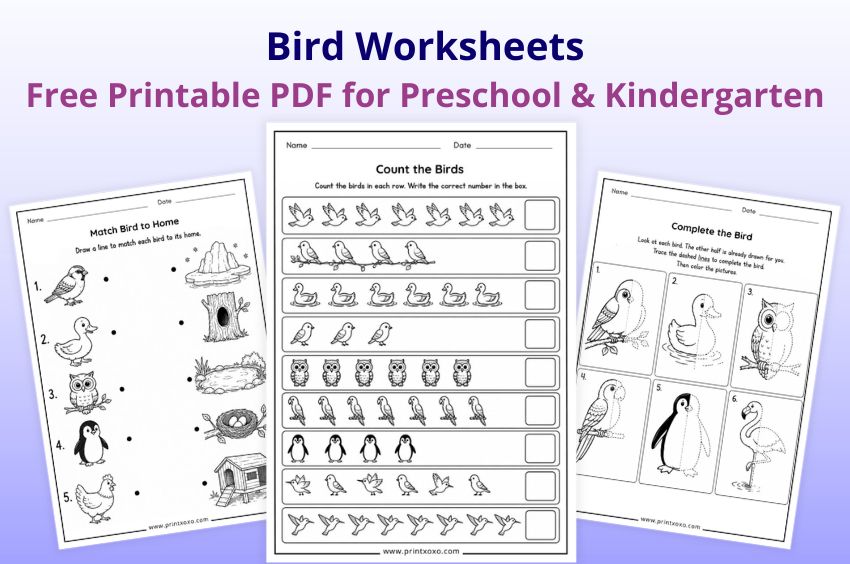
Birds are an easy topic for young children to connect with because they can often see them in their everyday surroundings. A bird in the backyard, a duck at a pond, or a bird building a nest can quickly turn into a learning opportunity.
free printable bird worksheets give preschool and kindergarten children different ways to explore birds while practicing early math, observation, matching, sorting, and fine motor skills.
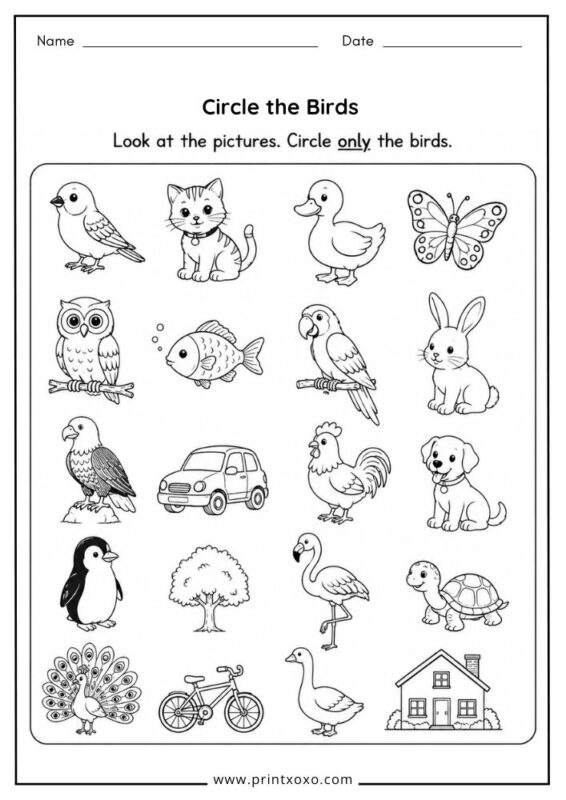
Children look at the pictures and decide which ones are birds. It is a simple way to get started with bird recognition and careful observation.
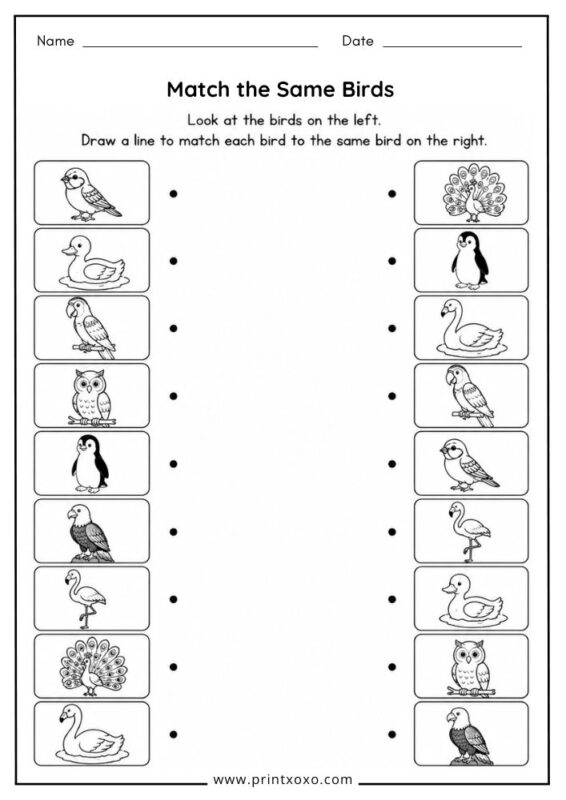
Children compare the bird pictures and draw a line between each bird and its matching picture. They need to look closely at the details before making each match.
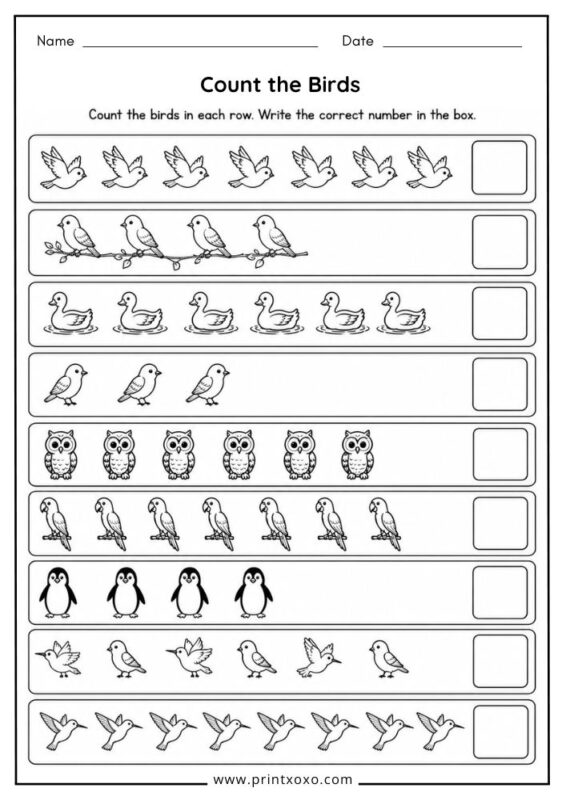
This worksheet brings an early math skill into the bird theme. Children count each group and write the number that matches what they see.
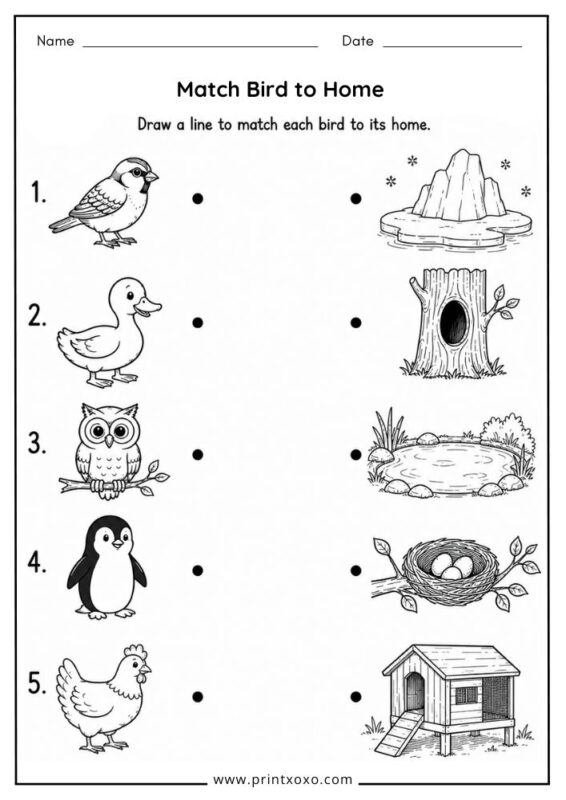
Children look at the birds and the different homes shown on the page, then match each bird with the place that belongs to it.
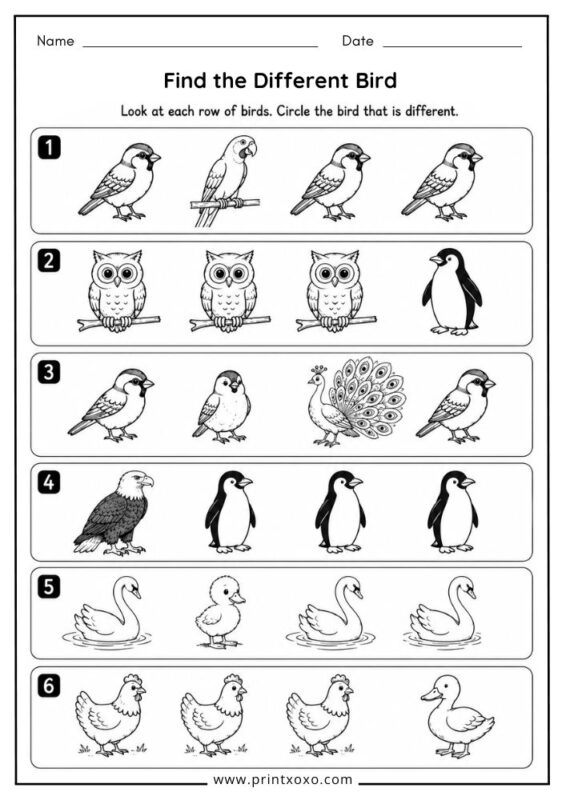
Each row has one bird that does not match the others. Children need to slow down and compare the pictures before choosing the different one.
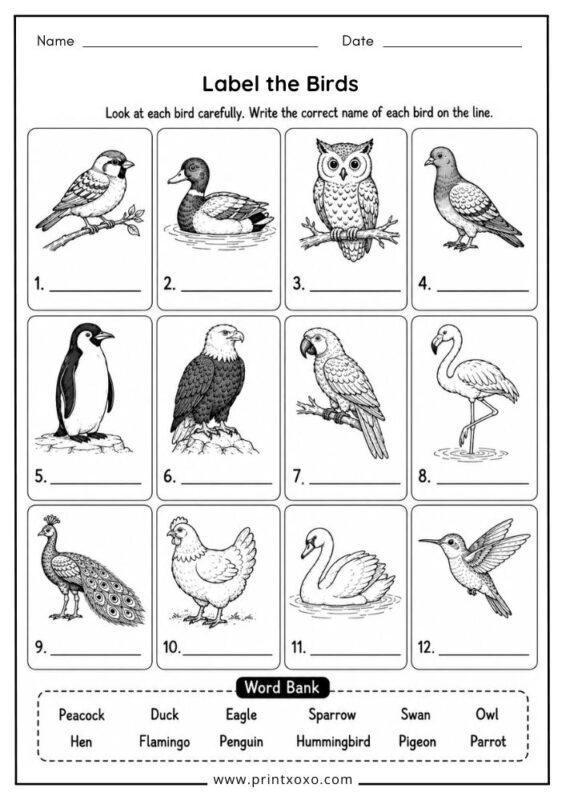
Children use the word bank to identify the birds and write their names below the corresponding pictures. This makes the activity a nice combination of bird recognition and early writing practice.
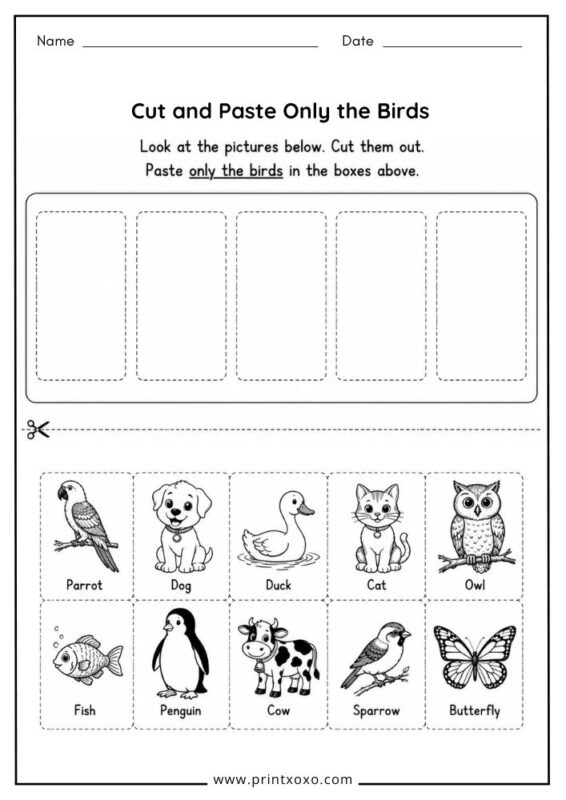
Children cut out the pictures and decide which ones belong in the bird group. The activity adds a hands-on element while giving children another opportunity to identify birds.
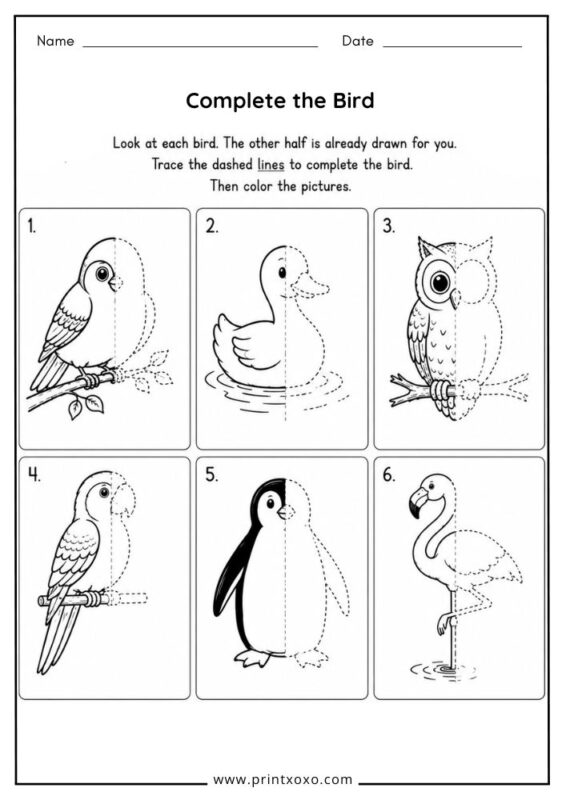
Children complete the missing side of each bird by following the dashed guide. They need to pay attention to the existing picture as they trace.
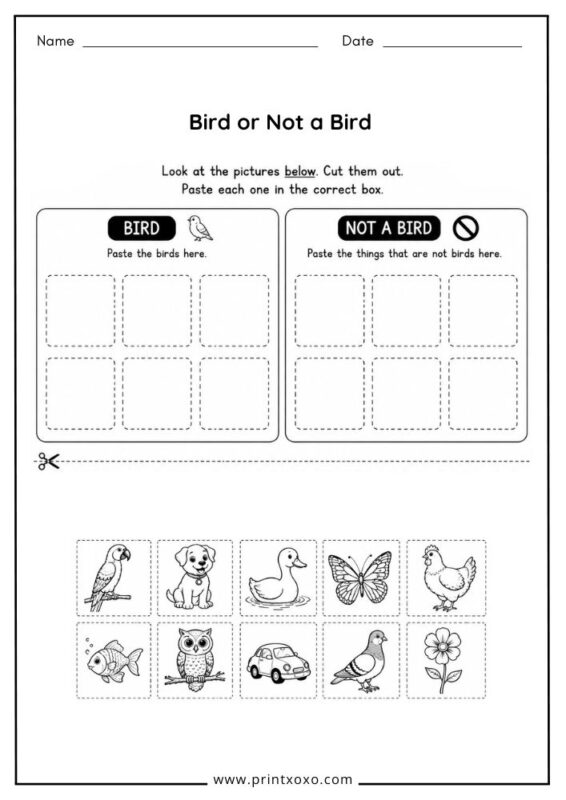
Children look at each picture and sort it into the correct group. This gives them a chance to think about what makes an animal a bird.
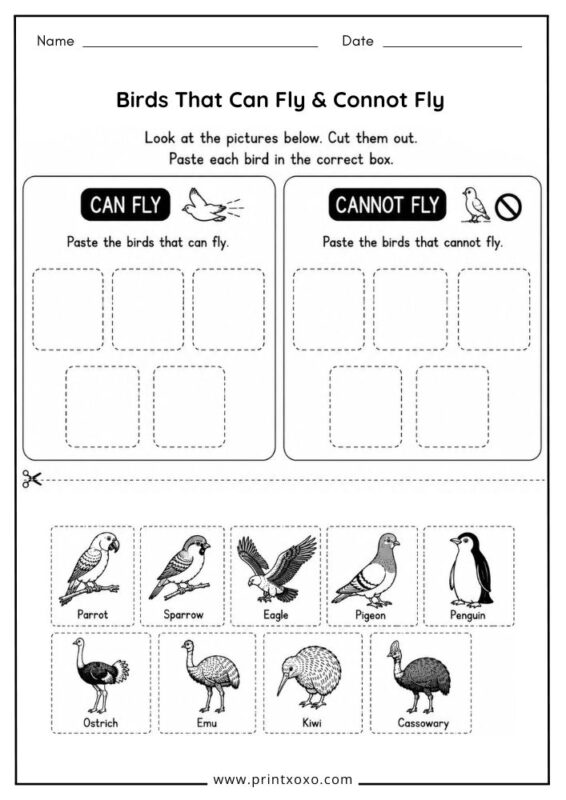
Not every bird moves through the air. In this worksheet, children sort the birds into groups based on whether they can fly.
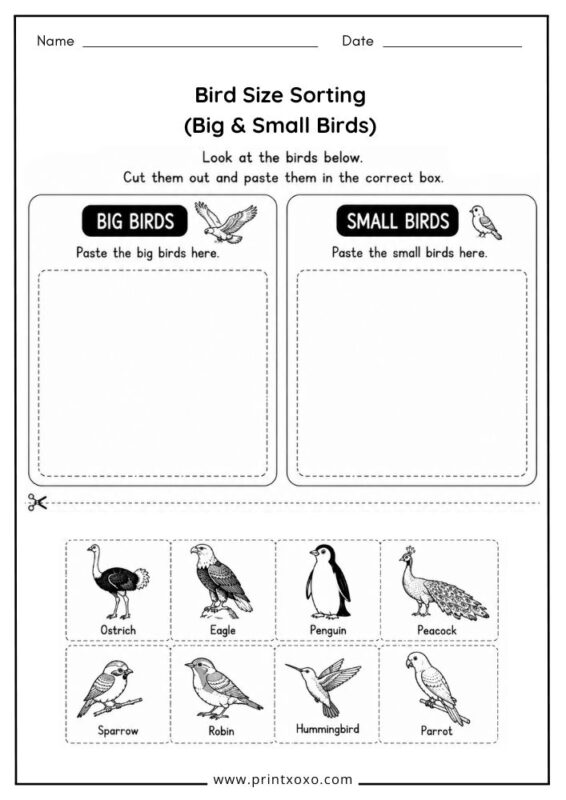
Children compare the birds shown on the page and sort them into the big and small groups.
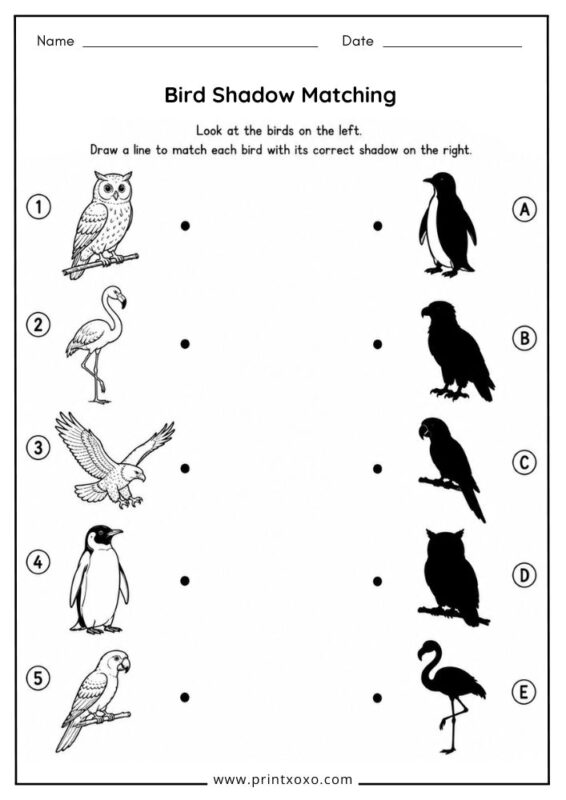
Children compare each bird with the available shadows and find the outline that matches. Looking at the shape of the bird helps them make the correct connection.
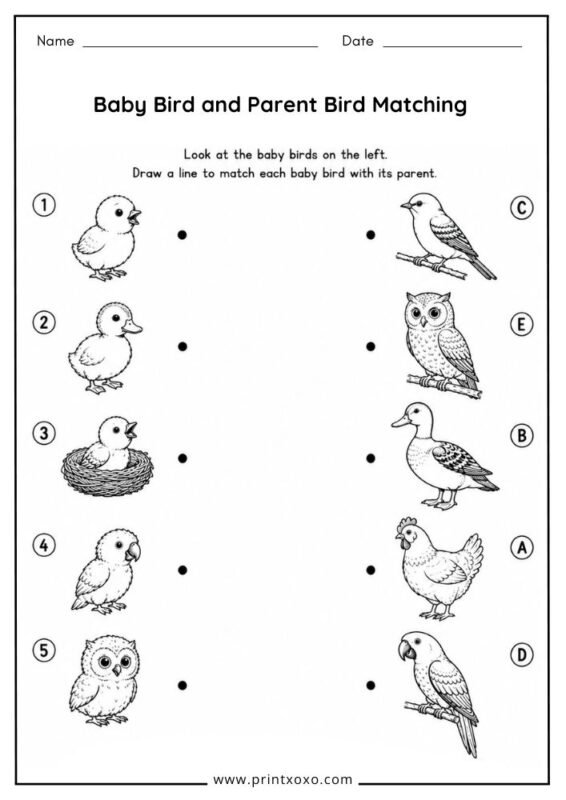
Children match the baby birds with their parent birds. It is a simple way to introduce animal families while practicing visual matching.
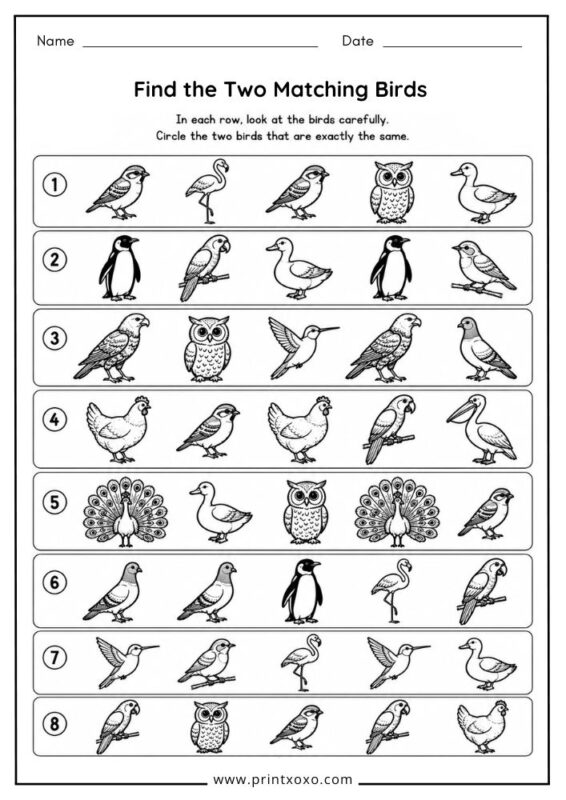
Several birds appear in each row, but only two are the same. Children carefully compare the pictures and circle the matching pair.
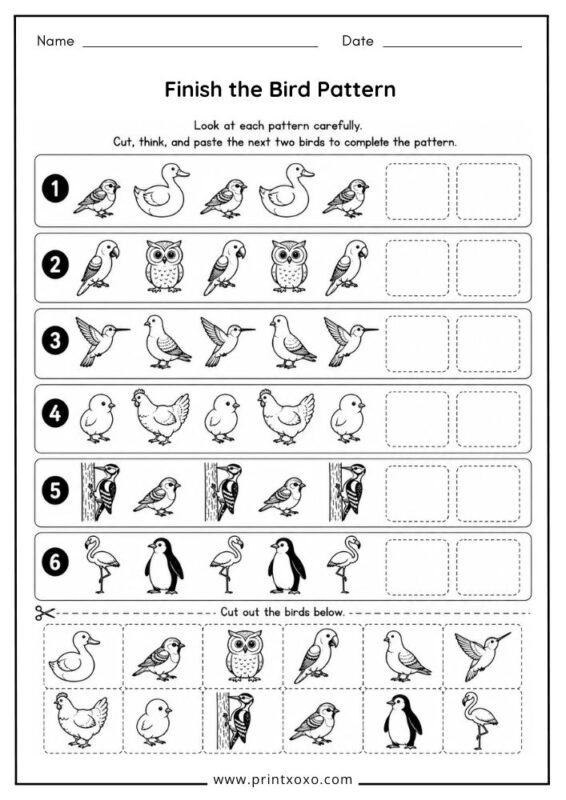
Children look at the sequence of bird pictures and figure out which pictures belong in the missing spaces to complete each pattern.
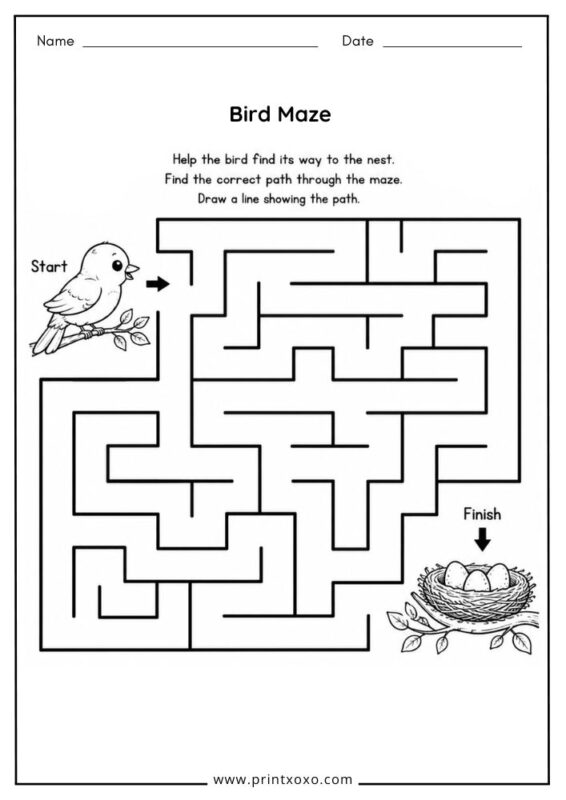
Children follow the correct path through the maze to help the bird reach its nest. It is a playful way to finish the collection while giving children some pencil-control and problem-solving practice.
Why Are Bird Worksheets Useful?
Birds are a great topic for early learning because children can often notice them in the world around them. A bird in the backyard, a duck at a pond, or a bird sitting on a fence can naturally lead to questions and conversations.
These worksheets build on that curiosity while giving children opportunities to practice several early learning skills. Instead of only learning about birds, children are also asked to count, match, sort, compare, recognize patterns, and solve simple problems.
Skills Children Develop With These Bird Worksheets
The 16 activities cover several areas of early learning. Depending on the worksheet, children practice:
- Bird identification
- Visual discrimination
- Counting and number recognition
- Matching
- Sorting and classification
- Pattern recognition
- Observation
- Critical thinking
- Fine motor skills
- Pencil control
- Vocabulary
- Early science concepts
- Problem-solving
The variety is useful because children are not practicing the same skill in exactly the same way on every page.
Learning About Birds Through Everyday Examples
You don’t need to wait for a formal science lesson to talk about birds.
If you see a bird outside, ask your child what they notice. You might talk about its feathers, beak, wings, or where it is sitting. If you are near a pond, children may notice ducks. At a park, they may see different birds than they see at home.
These simple observations can make the worksheet activities easier to understand because children have something familiar to connect them with.
Let Children Look Carefully
Several activities in this collection depend on careful observation rather than simply knowing the answer.
For example, when matching birds or finding two birds that are the same, encourage children to look at one picture at a time. They can compare the shape, size, beak, wings, or tail instead of quickly guessing.
The same approach works with the shadow matching activity. Looking at the outline and smaller details can help children decide which shadow belongs to a particular bird.
How Parents Can Use the Worksheets at Home
These worksheets can work well as a short activity after school, during a quiet afternoon, or as part of a weekend learning routine.
You don’t have to complete all 16 pages at once. Choose an activity that matches what your child is currently learning and let them work at a comfortable pace.
It can also help to talk while they work. Ask simple questions such as:
- “What do you notice about this bird?”
- “Which two birds look the same?”
- “How many birds do you see?”
- “What makes this picture a bird?”
A short conversation can turn a printable worksheet into a broader learning activity.
Using Bird Worksheets in the Classroom
Teachers can use these pages in several parts of the school day. They can fit into science centers, morning work, small-group instruction, independent practice, or a lesson about birds and nature.
For example, a teacher might introduce a bird-related topic with a short conversation and then give children one of the worksheets for individual practice. Children who need more support can work with an adult or small group, while children who are ready for independent work can complete the page on their own.
Bird Worksheets for Homeschool
For homeschool families, these worksheets can be added to a nature or early science lesson without needing a complicated setup.
You could begin with a conversation about birds, look at birds outside or in a book, and then choose one worksheet that connects with the discussion. The worksheet provides a simple hands-on follow-up to what the child has been observing.
What Age Are These Worksheets For?
These bird worksheets are designed for preschool, Pre-K, and kindergarten, generally around ages 3–6.
Children develop at different rates, so some activities may feel very easy for one child and require more help from another. That’s completely fine. You can choose individual pages based on your child’s current skills rather than expecting them to complete the collection in order.
Printing the Bird Worksheets
The worksheets are designed to be black and white, so you don’t need a color printer. This makes them practical for regular printing at home, in a classroom, or for homeschool use.
For printing, US Letter (8.5 × 11 inches) is the standard paper size for most home and classroom printers in the United States. If you use A4 paper, select A4 in your printer settings and use the fit-to-page option if needed.
After completing an activity, children can also color the bird illustrations where appropriate, adding a little creative time after the learning task is finished.
Frequently Asked Questions
Are these bird worksheets free to print?
Yes. The worksheets are free to download and print for personal, classroom, and homeschool use.
What age group are these bird worksheets designed for?
They are best suited for preschool, Pre-K, and kindergarten children, typically ages 3–6.
What skills do children practice?
The collection includes activities that practice bird identification, counting, matching, sorting, classification, patterns, visual discrimination, fine motor skills, problem-solving, and early science concepts.
Can teachers use these worksheets in the classroom?
Yes. They can be used for science lessons, learning centers, morning work, independent practice, and small-group activities.
Are these worksheets suitable for homeschool?
Yes. They provide a simple hands-on way to include bird-themed learning in a homeschool routine.
Do I need a color printer?
No. The worksheets are designed in black and white, making them easy and economical to print.
Final Thoughts
Birds give young children a familiar way to explore the natural world while building early learning skills. With 16 free printable bird worksheets, children can practice everything from counting and matching to sorting, patterns, observation, and simple problem-solving.
Whether you’re using them at home, in a classroom, or as part of a homeschool lesson, you can choose the activities that fit your child’s current level and let the learning happen at a comfortable pace.